India and UAE Plan Subsea High-Speed Rail
2,000-km underwater rail to link Mumbai and Dubai in 2 hours, revolutionizing travel and trade

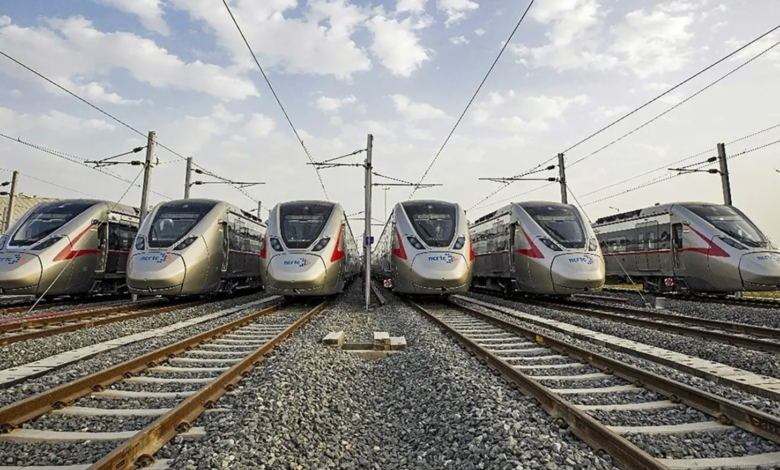
India–UAE Subsea High-Speed Train: A Visionary Leap Toward Futuristic Travel
Imagine a modern, high-speed underwater train that would take you from Mumbai to Dubai in just two hours, gliding beneath the waves of the Arabian Sea. A once-terrible idea is now being reimagined, as India and the United Arab Emirates explore the possibilities of a new underwater railway line that could revolutionize international transport.
The UAE’s National Advisory Bureau Limited (NABL) is at the heart of this ambitious project, which is backing the concept of a 2,000-kilometre underwater high-speed rail network. The corridor, which runs beneath the Arabian Sea, will connect Mumbai and Dubai, two of the region’s most dynamic cities. It will significantly reduce travel times and create new opportunities for cross-border cooperation. It would significantly cut down on travel times and create new opportunities for cross-border cooperation.
Taking inspiration from Hyperloop-style technology, the proposed train is expected to reach speeds of 600 to 1,000 kmph. Fast, direct, and eco-friendly transportation between India and the United Arab Emirates will be offered by this high-speed train, if it is put into service. Apart from enhancing tourism, the project is anticipated to fortify the already strong cultural and economic bonds between the two nations.
There are, nevertheless, barriers to advancement. A railway line beneath one of the most colorful oceans in the world is a huge engineering feat. The technological difficulties range from controlling the elevated underwater pressure to guaranteeing the tunnel’s structural soundness. While the environmental sustainability of running such a system is an important consideration, particularly as the globe moves toward greener infrastructure, passenger comfort and operational resilience continue to be top priorities when it comes to safety.
It’s interesting to note that the planned rail system isn’t just for passenger transportation. Additionally, it is being envisioned as a multipurpose line that can carry essential goods like drinkable water and crude oil. By simplifying the supply of essential items and lowering the carbon footprint usually associated with air and sea freight, this multipurpose strategy has the potential to revolutionize logistics between the two countries.
Currently in its conceptual phase, the project awaits government clearances and diplomatic coordination. If the technical, environmental, and financial aspects can be successfully addressed, and bilateral agreements fall into place, the goal is to complete this groundbreaking initiative by 2030.
This kind of effort could have global implications. By pushing the boundaries of transportation technology and changing the way countries communicate, a successful undersea bullet train between India and the United Arab Emirates could serve as a model for similar international projects. More significantly, it supports international efforts to build sustainable, future-proof infrastructure by providing a low-polluting option for flying.
In conclusion, the undersea high-speed train connecting India and the United Arab Emirates is a testament to innovative collaboration and an engineering feat. Despite the many challenges ahead, this vision is one of the most exciting transport ideas of the twenty-first century, as it has the potential to improve the economy, the environment, and connectivity.