Minimum Speed Limit in Abu Dhabi: Rules, Fines, and Important Things Drivers Should Know
Minimum Speed Limit Set to Control the Accidents

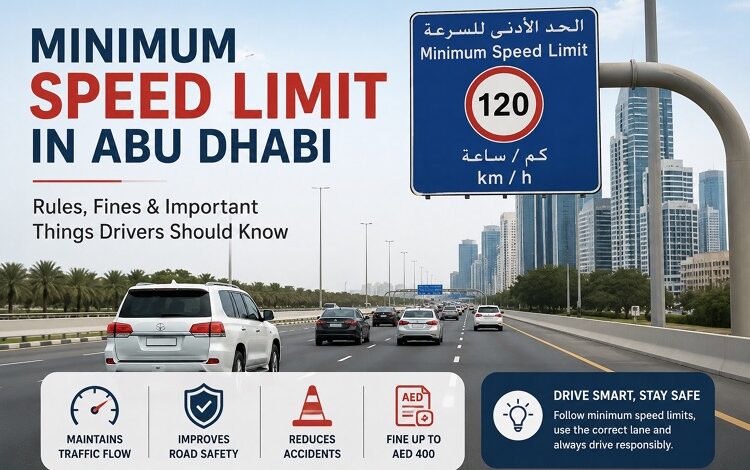
Driving in Abu Dhabi is known for its well-maintained roads, advanced infrastructure, and strict traffic regulations. While many motorists focus mainly on maximum speed limits, an equally important rule that drivers must understand is the minimum speed limit. Abu Dhabi introduced minimum speed regulations on selected highways to improve traffic flow and reduce accidents caused by unnecessarily slow driving.
Understanding these rules is important for both residents and tourists because violating minimum speed laws can lead to traffic fines and create dangerous situations on busy roads.
What Is the Minimum Speed Limit?
A minimum speed limit is the lowest speed a vehicle is legally allowed to travel on certain roads or lanes. These limits are designed to prevent vehicles from moving too slowly and obstructing traffic.
In Abu Dhabi, minimum speed limits are mainly implemented on major highways where vehicles are expected to maintain smooth and consistent traffic movement.
Minimum Speed Rule in Abu Dhabi
One of the most notable minimum speed regulations in Abu Dhabi was introduced on Sheikh Mohammed Bin Rashid Road (E311). On specific left lanes of the highway, drivers are required to maintain a minimum speed.
Key Rule:
- Vehicles driving below the specified minimum speed in designated lanes may receive a fine.
- The rule generally applies to the fast lane or selected lanes intended for faster-moving traffic.
For example, on certain sections of the E311 highway:
- The minimum speed limit was set at 120 km/h in the left lane.
- Vehicles traveling slower than this without a valid reason could be penalized.
However, drivers should always follow updated road signs because speed regulations can change depending on:
- Road conditions
- Construction work
- Weather conditions
- Traffic management updates
Why Was the Minimum Speed Limit Introduced?
The Abu Dhabi authorities implemented minimum speed regulations for several important reasons.
1. Improving Traffic Flow
Slow-moving vehicles in fast lanes often cause congestion and sudden braking. Maintaining a minimum speed helps ensure smoother traffic movement.
2. Reducing Accidents
Large speed differences between vehicles can increase accident risks. When some vehicles move too slowly in high-speed lanes, faster drivers may make dangerous lane changes.
3. Encouraging Lane Discipline
The rule encourages motorists to use the correct lanes according to their driving speed. Slower vehicles are expected to remain in the right lanes.
Fine for Violating Minimum Speed Rules
Drivers who fail to maintain the required minimum speed in designated areas may face penalties.
Common Penalty:
- Fine of approximately AED 400
The violation is usually detected through smart traffic monitoring systems and road cameras.
Important Driving Tips
Use the Correct Lane
- Left lanes are generally for overtaking or faster-moving traffic.
- Slower vehicles should stay in the middle or right lanes.
Watch Road Signs Carefully
Always pay attention to electronic boards and posted signs because minimum speed limits may vary by location.
Drive According to Conditions
Even if a minimum speed exists, safety always comes first. During fog, heavy rain, or traffic congestion, drivers should prioritize safe driving.
Avoid Unnecessary Slow Driving
Driving significantly below the normal traffic speed without a reason can disturb traffic flow and increase accident risks.
Difference Between Abu Dhabi and Other Emirates
Abu Dhabi is known for stricter speed monitoring systems compared to some other emirates in the UAE.
One important difference is:
- Abu Dhabi generally enforces speed limits exactly as posted.
- Some emirates may allow a speed buffer above the posted limit, but Abu Dhabi roads often use strict enforcement.
Drivers traveling between emirates should remain alert and avoid assuming the same rules apply everywhere.
Role of Smart Traffic Systems
Abu Dhabi uses advanced traffic technologies, including:
- Smart cameras
- Radar systems
- AI-based monitoring
- Electronic traffic signs
These systems help authorities monitor:
- Speed violations
- Lane discipline
- Traffic congestion
- Dangerous driving behavior
The minimum speed rule is part of the emirate’s broader effort to improve road safety through intelligent transportation systems.
Safety First: When Minimum Speed May Not Apply
Drivers should remember that safety is always the priority. In certain situations, driving below the minimum speed may be necessary, such as:
- Heavy fog
- Accidents
- Road construction
- Vehicle issues
- Emergency situations
In such cases, motorists should use hazard lights if needed and move safely to appropriate lanes.
Conclusion
The minimum speed limit in Abu Dhabi is designed to improve road safety, traffic flow, and lane discipline. While many drivers focus only on avoiding overspeeding fines, driving too slowly in designated fast lanes can also result in penalties.
By understanding lane rules, following posted signs, and maintaining safe driving habits, motorists can avoid fines and contribute to safer roads for everyone.
Whether you are a resident or visitor in the UAE, staying informed about Abu Dhabi traffic regulations is essential for safe and stress-free driving.