UAE President Hosts Emirates Rulers, Crown Princes for Ramadan
Ramadan Exchange: UAE Leaders Gather at Qasr Al Watan

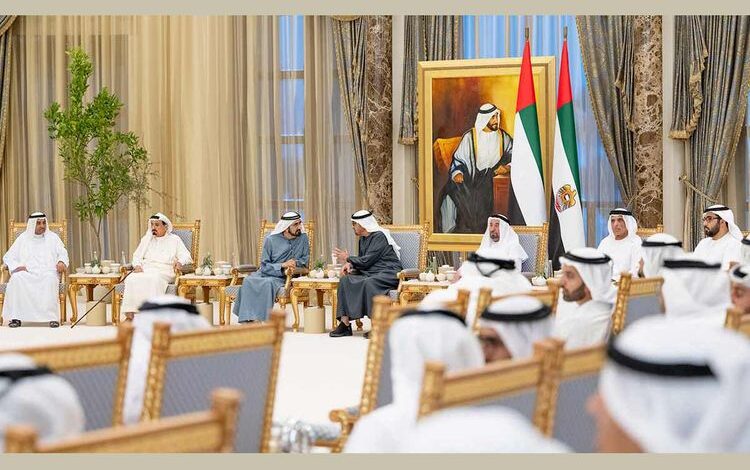
UAE President Sheikh Mohamed bin Zayed Al Nahyan Hosts Emirati Leaders for Ramadan Exchange
Embracing the spirit of unity and reverence, President His Highness Sheikh Mohamed bin Zayed Al Nahyan graciously welcomed esteemed members of the Federal Supreme Council and Rulers of the Emirates to the majestic Qasr Al Watan in Abu Dhabi. This momentous gathering, convened during the sacred month of Ramadan, underscored the nation’s commitment to solidarity and communal harmony.
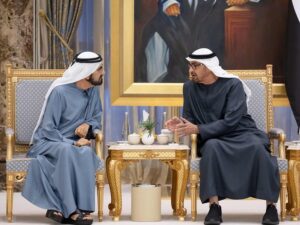
Within the resplendent halls of Qasr Al Watan, a palpable sense of warmth and camaraderie prevailed as leaders exchanged heartfelt greetings and prayers for blessings, mercy, and prosperity for the nation and its people. The presence of dignitaries, including His Highness Sheikh Mohammed bin Rashid Al Maktoum, Vice President and Prime Minister of the UAE and Ruler of Dubai, lent solemnity and spiritual significance to the occasion.
Among the esteemed attendees were eminent figures such as His Highness Sheikh Dr Sultan bin Muhammad Al Qasimi, Ruler of Sharjah; His Highness Sheikh Humaid bin Rashid Al Nuaimi, Ruler of Ajman; His Highness Sheikh Hamad bin Mohammed Al Sharqi, Ruler of Fujairah; and His Highness Sheikh Saud bin Saqr Al Qasimi, Ruler of Ras Al Khaimah, dignitaries whose presence underscored the significance of the gathering.
Also present were esteemed Crown Princes, Deputy Rulers, and prominent figures from across the Emirates, symbolizing the nation’s commitment to fostering unity and solidarity. Notable among them were Sheikh Hamdan bin Mohammed bin Rashid Al Maktoum, Crown Prince of Dubai, and Sheikh Ahmed bin Mohammed bin Rashid Al Maktoum, Second Deputy Ruler of Dubai, whose participation added distinction to the event.
In an atmosphere charged with spirituality and contemplation, the leaders came together to observe the Maghrib prayer, a moment of collective reflection and gratitude. Following this solemn ritual, an exquisite iftar banquet, featuring traditional Emirati delicacies, was hosted by His Highness the President, symbolizing the spirit of generosity and hospitality ingrained in Emirati culture.
As the evening unfolded within the splendid confines of Qasr Al Watan, leaders from across the Emirates reaffirmed their commitment to unity, cooperation, and mutual respect. This gathering, infused with the values of compassion, generosity, and community solidarity, served as a poignant reminder of the enduring spirit of brotherhood that unites the people of the UAE during the sacred month of Ramadan.