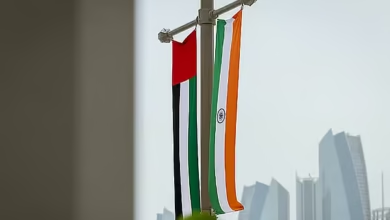
Palestinian Authority Targets Barghouti Over Criticism of UAE-Israel Ties
Internal Strife Erupts Amid Palestinian Criticism of UAE Relations

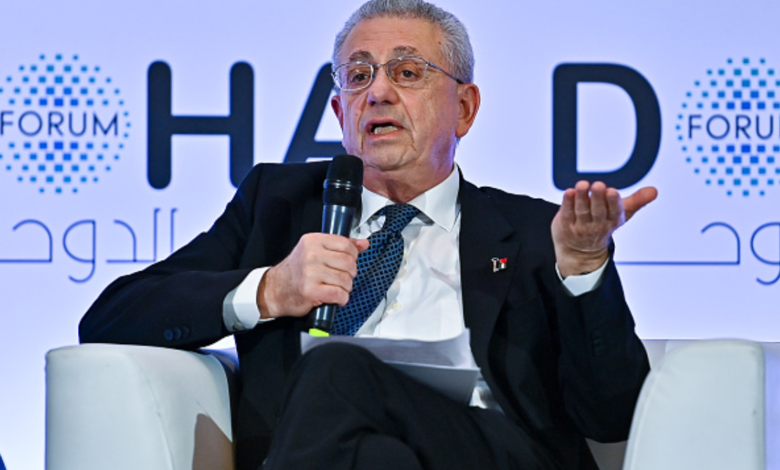
Palestinian Authority Launches Coordinated Attack on Mustafa Barghouti Over UAE-Israel Criticism
Mustafa Barghouti, the secretary-general of the Palestinian National Initiative (PNI), has been the target of a media campaign by the Palestinian Authority (PA) in response to his recent comments against the UAE’s normalization of relations with Israel. Internal political tensions in Palestine have been escalating since the start of the Gaza conflict in October 2023, and the campaign accelerated on Friday.
A video in which Barghouti attacks the Abraham Accords and implies that younger UAE generations are growing more disengaged from the Palestinian cause is at the heart of the debate.
His remarks were quickly condemned by PA spokesperson Nabil Abu Rudeineh, who accused Barghouti of making “offensive” comments toward the UAE and stressed that such statements do not reflect the official stance of the State of Palestine.
Rudeineh went further, alleging that Barghouti is influenced by “agendas that do not serve the interests of the Palestinian people,” and reaffirmed the PA’s commitment to maintaining respectful relations with Arab nations. He emphasized that attacking the leadership of “brotherly countries” like the UAE was unacceptable.
The PA’s sharp response is being widely interpreted as part of a broader, organized campaign to discredit Barghouti, whose profile has risen significantly since the start of Israel’s offensive in Gaza. Barghouti has established himself as a well-known and reliable voice in regional and global media, vehemently upholding Palestinian rights and denouncing Israeli policy as well as the alleged passivity of the Palestinian leadership.
According to reports, his criticism of the PA has caused unrest within elements of the ruling Fatah organization, especially with regard to its position on the conflict and apparent indifference to Israel’s occupation. According to analysts, the PA might view his increasing sway, particularly among younger Palestinians and the international community, as a challenge to its hegemony in the West Bank.
In his defense, Barghouti clarified that he had not insulted the UAE or its people, asserting that his comments were political in nature and aimed at addressing the broader trend of Arab disengagement from the Palestinian cause. Noting that his remarks reflect his own political position and not those of any official Palestinian body, he also voiced dismay that the PA decided to publicly criticize him without first requesting clarification.
Social media users showed their support for Barghouti in spite of the criticism, applauding his ongoing support of Palestinian rights. Many users also cited old video footage in which the same PA spokesperson, Nabil Abu Rudeineh, had vehemently condemned the UAE’s normalization with Israel, calling it a betrayal of Jerusalem and the Palestinian cause, in order to highlight the apparent contradiction in the PA’s current position.
The campaign against Barghouti, according to observers, is a reflection of a larger conflict in Palestinian politics, where opposition to the leadership is frequently greeted with severe reprisals while opposition to Israeli policies is occasionally marginalized.
Concerns about generational changes in Arab nations are reflected in Barghouti’s remarks in the contentious video.
He observed that many young people in the Gulf, particularly in the UAE, increasingly view themselves through a globalized, cosmopolitan lens and are growing distant from the Palestinian narrative. “They don’t see themselves as part of the Arab world in the same way. They view the Palestinian issue as something from another era,” he noted.
As the internal debate intensifies, it remains to be seen whether voices like Barghouti’s will continue to be sidelined—or spark a deeper conversation about leadership, accountability, and unity within the Palestinian movement.