

Sheikh Mishal, Kuwait’s new emir, swears the oath of office
The newly appointed leader, recognized for his reform-oriented approach, vowed to uphold constitutional principles and combat corruption

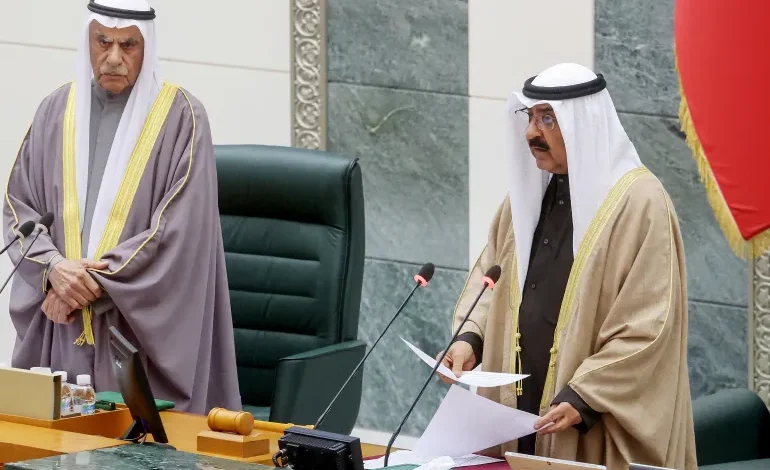
Sheikh Mishal al-Ahmad al-Sabah, Kuwait’s new emir, has taken the official oath before parliament, marking the commencement of his leadership over the prosperous Gulf monarchy.
Following the passing of his half-brother, Sheikh Nawaf al-Ahmad al-Sabah, on Saturday, the newly appointed emir undertook the oath of office in a dedicated session of the National Assembly on Wednesday morning, assuming leadership.
In his inaugural speech, Sheikh Mishal affirmed his commitment to safeguarding the nation, its people, and upholding constitutional principles while combating corruption.
“I solemnly swear to uphold the constitution and laws of the state, defend the freedoms, interests, and properties of our people, and protect the nation’s independence and territorial integrity,” he vowed.
At 83 years old, Sheikh Mishal becomes Kuwait’s third ruler in just over three years. He assumed de facto leadership in 2021 when Sheikh Nawaf delegated most of his duties due to frailty.
With a history of service in Kuwait’s National Guard and State Security, spanning from the 1960s to 2020, Sheikh Mishal brings extensive experience to his new role.
As he assumes leadership of the OPEC oil-producing nation, Sheikh Mishal is anticipated to maintain Kuwait’s fundamental foreign policies, including backing Gulf Arab unity and alliances with Western nations.
Developing strong ties with Saudi Arabia is among his primary objectives. Additionally, the new emir might seek to bolster relations with China as Beijing aims for increased regional involvement.
Political analyst Hussain Jamal, speaking to Al Jazeera, indicated that Kuwait’s foreign policy is expected to maintain its current trajectory under the new emir.
He summarized Kuwait’s stance as “zero enemies and a multitude of allies,” both regionally and on the global stage.
As the leader, Sheikh Mishal faces the enduring challenge of reconciling tensions between the ruling family and dissenters within Kuwait’s persistently gridlocked and divided parliament. Critics argue that this friction has impeded fiscal and economic reforms.
In 2022, Sheikh Mishal intervened in a prolonged conflict between the government and parliament by dissolving the parliament, calling for new elections, and appointing a new prime minister. However, he explicitly stated no intention to influence the vote or the selection of the parliament speaker.
Following his inauguration, Sheikh Mishal criticized previous appointments to positions that he deemed inconsistent with basic principles of fairness and justice.
He emphasized the significance of diligent oversight, responsible accountability, and objective scrutiny within the confines of the constitution and legal framework to address negligence, misconduct, and actions detrimental to citizens’ interests.
Abdulaziz Mohammed Al-Anjeri, from the Kuwaiti think tank Reconnaissance Research, expressed to Al Jazeera that Sheikh Mishal was inclined towards a reformist approach.
“He is someone who prioritizes impartiality and fairness in his decision-making, avoiding nepotism or favoritism,” noted Al-Anjeri.


