Dubai Expanding Electric Vehicle Green Charging Network, Aiming for 1,000 Stations by 2025
Ambitious Strategy Targets 1,000 Stations by 2025

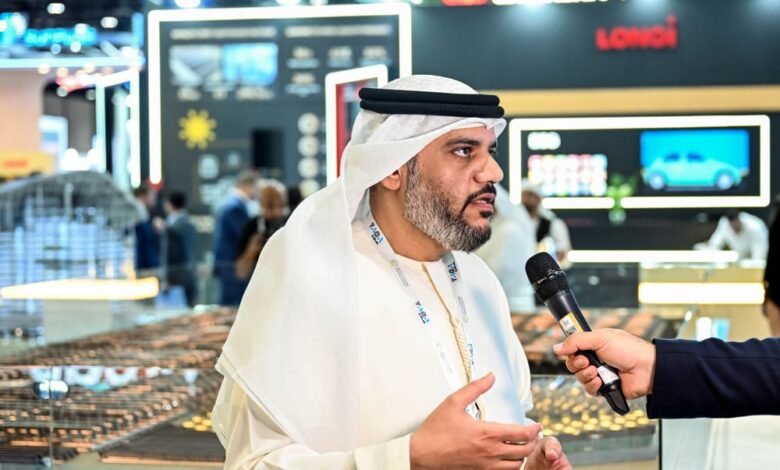
DEWA Director Unveils Plan to Expand Dubai’s EV Charging Network
Majid Hilal Al Hazami, the Director of Smart Grid Projects Management at the Dubai Electricity and Water Authority (DEWA), has outlined a visionary plan to significantly expand Dubai’s green charging infrastructure for Electric Vehicles (EVs). With approximately 390 charging stations currently operational across the emirate, DEWA is poised to undertake a substantial augmentation of this network in the years to come.
Al Hazami’s announcement came during his participation at the esteemed World Future Energy Summit (WFES) held in Abu Dhabi. At the summit, he elucidated DEWA’s strategic roadmap, which aims to elevate the number of EV charging stations to 1,000 by the culmination of 2025. This ambitious expansion project also entails a notable increase in the deployment of ultra-fast chargers, further enhancing the accessibility and efficiency of EV charging facilities across Dubai.
Delving into the intricacies of green chargers, Al Hazami shed light on the diverse charging speeds and strategic deployment locations. Fast and ultra-fast chargers, strategically positioned at petrol stations and pivotal entry and exit points throughout Dubai, facilitate swift and convenient charging experiences for EV users.
Al Hazami further expounded on the superior performance of ultra-fast chargers, which boast the capability to charge up to 80 percent of a vehicle’s battery within a remarkably short timeframe of 20 to 40 minutes, contingent upon the battery capacity and vehicle model. Conversely, medium-speed chargers, commonly found in bustling commercial hubs such as shopping malls, parks, and office complexes, offer a slightly lengthier charging duration of approximately 2 to 4 hours to achieve the same 80 percent charge.
The inception of the Green Charger initiative in 2014 marked a significant milestone in Dubai’s sustainable mobility journey. Since its inception, the initiative has witnessed steady expansion, with the completion of its initial phase in 2015, which saw the installation of 100 charging stations. Al Hazami emphasized the pivotal role of smart grid management in not only achieving sustainability objectives but also in optimizing customer service delivery within the energy sector.
DEWA’s active participation in prestigious events such as the World Future Energy Summit underscores its commitment to advancing clean energy trends on a global scale. Al Hazami highlighted DEWA’s groundbreaking Mohammed bin Rashid Solar Energy Project, hailed as the largest of its kind worldwide for solar energy production. He underscored the project’s innovative technologies and emphasized the towering solar power tower, soaring over 263 meters, as a testament to Dubai’s dedication to pioneering sustainable energy solutions.
Moreover, Al Hazami lauded the instrumental role played by DEWA’s Innovation Center in fostering clean energy initiatives and nurturing future innovations. The center’s profound impact extends beyond DEWA’s endeavors, as it actively collaborates with various entities, including universities, to propel advancements in clean energy technology and sustainability practices.
In summation, DEWA’s expansive vision for Dubai’s green charging infrastructure, coupled with its unwavering commitment to sustainability and innovation, underscores the emirate’s position as a global leader in the transition towards a greener, more sustainable future.