UAE to host first regional center of excellence for enhanced food security
New initiative to transform food systems in the Middle East through climate-smart agriculture and innovative solutions

UAE and FAO Launch First Regional Center of Excellence for Food Security
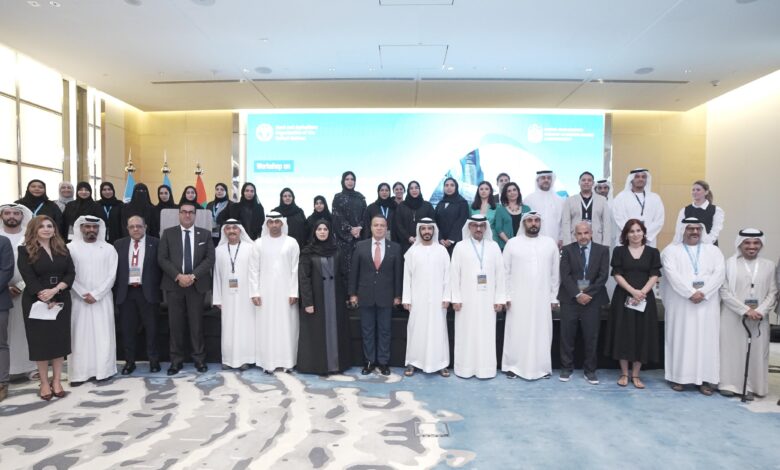
The Ministry of Climate Change Environment (MOCCAE) of the United Arab Emirates, along with the Food and Agriculture Organization (FAO) of the United States organized an interactive workshop in Dubai recently. Territory.
A major announcement is that the kingdom has been selected as the first Regional Center of Excellence for Transforming Food Systems, an interesting trail aimed at innovation and strategic exchange in food practices spanning the Middle East and North Africa.
The center will also focus on the modernization and solutions of food security, the use of modern, weather-smart technology education, which is central to the long-term food strategy.
Efforts to support food systems, agriculture
Assistant Undersecretary for Foods Dr. Muhammad Salman Al Hamadi on a wheelchair.
The creation of a National Agriculture Center and the “Plant the Emirates” initiative are essential for boosting regional agricultural output and raising productivity.
The goal of these initiatives is to offer farmers full support as the agriculture industry adopts smart technologies to address issues like fluctuating weather patterns, limited food supplies, etc.
“We rely heavily on modern, climate-smart agricultural systems to support our national food security efforts,” Do Al Hamadi said. “Through our continued partnership with FEO, we will address key challenges and practical solutions will be implemented and all relevant partners will work together to lead the agriculture sector forward.”
FEO, a major partner of Inn’s food tour. Kayan Akram Jaff, Head of Mission of the FEO Sub-Regional Office in Yemen for the Gulf Cooperation Council (GCC) states, said, “The Ministry of Food and Agriculture is representative of supporting the parties in addressing security challenges. We will focus on strategic initiatives that align with our participant’s objectives and local preferences.
Ongoing partnership
Discussions on the organization and functioning of the FEO subregional office and its critical role in the development of sectoral food security are included in the region. Both organizations reaffirmed their commitment to develop a clear road map for collaboration to improve GCC sustainable agricultural systems and food security systems.
As part of their continuing collaboration, MOCCAE and FAO will collaborate to develop workable solutions for the food industry in the majority of regions.
The first is the creation of a Regional Center of Excellence, whereby it will be required to contribute to international initiatives aimed at enhancing agro-refining and agro-refining in order to develop a national footprint in a country.