KHDA has Declared the Reopening Date for Early Childhood Centers.
The KHDA of Dubai has announced the date for the reopening of early childhood centers.

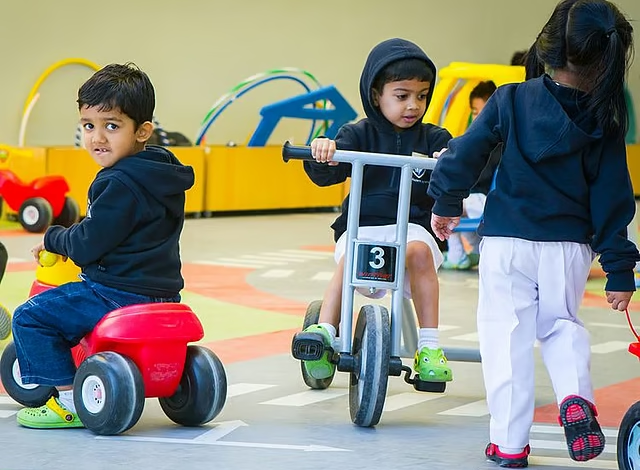
Reopening of childhood centers
Private early childhood centers in Dubai are set to ease back into on-site classes, marking a significant step towards normalcy. These centers will initially focus on those located in government buildings and commercial areas, starting from Thursday, April 16. The Knowledge and Human Development Authority (KHDA) shared this exciting news on Tuesday night, emphasizing the importance of these centers in the early development of children.
This announcement follows fresh updates from the Education, Human Development, and Community Development Council, which released guidelines on the same Tuesday. The council indicated that schools throughout the country can gradually transition back to face-to-face classes, with nurseries taking the lead in this phased reopening starting this week. This process aims to ensure that children can return to learning environments that support their growth and socialization.
Centers situated in government buildings and shops have the first opportunity to reopen, while other facilities may continue to provide home-based childcare services under established guidelines. This staggered approach is designed to ensure a smooth transition back to normal operations while prioritizing the health and safety of children and staff.
Full safety regulations are in effect for all centers. Each reopening must receive the green light from the KHDA. Strict measures are in place to safeguard children and create secure environments. KHDA has been clear about the necessity of adhering to these guidelines to maintain high safety standards.
Safety remains the top priority for children, workers, and the broader community. Authorities urge everyone to rely on official UAE news sources, avoiding the spread of unchecked rumors. This call for caution is crucial in ensuring that accurate information is disseminated during this transitional period.
Home nursery options were rolled out on April 11, expanding the available choices for parents. KHDA introduced two new services that allow private centers to conduct center-led home learning groups. Additionally, they offer center-supervised home lessons for children up to age six, providing flexibility for families while ensuring continuity in education.
These new options significantly enhance the choices available for parents, allowing them to maintain educational engagement for their children during challenging times. The focus remains on ensuring quality and safety, reassuring parents that their children are receiving high standards of care even outside traditional classroom settings.
The Center-Led Home Learning (CLHL) hubs operate like mini-nurseries within vetted homes, accommodating up to eight children from different families. Each hub is supervised by trained center staff, providing a safe and nurturing environment. This innovative approach allows children to interact and learn together, replicating the social aspects of traditional nursery experiences.
CLHL teachers offer personalized home assistance, ensuring that each child receives the support they need. A licensed KHDA teacher from the center is responsible for guiding one child or a group of siblings within a home setting, fostering an educational atmosphere that adapts to individual learning styles and needs.
These services are strictly limited to times when remote learning is mandated by the government, ensuring that centers can only utilize these arrangements during specific circumstances. KHDA has emphasized the importance of this limitation to maintain the integrity of educational standards.
To facilitate effective home lessons, KHDA has established a straightforward plan outlining seven key rules that must be followed. Centers are required to obtain necessary licenses, conduct risk assessments, and secure parental consent. Additionally, safety plans for children must be in place, staff documentation must be current, and regular monitoring and check-ins are mandated. Insurance coverage is also a requirement, ensuring comprehensive protection for all involved.
One critical aspect emphasized in the rules is that transitioning to home settings must not compromise the quality of education. Centers are dedicated to maintaining the same level of care, routine, and learning experiences as those provided in on-site locations, ensuring that children continue to thrive regardless of their learning environment.
Moreover, the KHDA is committed to continuous improvement and feedback from families. By actively engaging with parents and educators, the authority can refine guidelines and practices, ensuring that the reopening process is responsive to the needs of the community. These collaborative efforts are vital in creating a resilient educational framework that can adapt to future challenges. As the community embraces these changes, the emphasis on the importance of early childhood education becomes more pronounced, highlighting the critical role that these childhood centers play in shaping the future of our children.
Furthermore, it is essential to understand the broader implications of this reopening for the community. By allowing childhood centers to resume operations, families can regain a sense of normalcy, contributing positively to mental health and well-being. Parents can return to work with the reassurance that their children are in safe, educational environments, fostering both personal and community growth. As parents navigate these changes, they may also seek additional resources and support, including parenting workshops and community forums, which can further enhance their engagement with local educational initiatives.