AI-powered effort to restore thousands of hectares of mangroves in the UAE
Mangroves and diverse ecosystems in the UAE are set for restoration through cutting-edge AI and robotics innovation

Abu Dhabi Takes Bold Step Towards Ecosystem Restoration with AI-Powered Initiative
Abu Dhabi: Mangroves and other important ecosystems in the UAE and elsewhere are to be preserved and restored through a ground-breaking climate technology project. The project represents a major advancement in using state-of-the-art technology to solve environmental issues.
Nabat: Using Robotics and AI to Restore Ecosystems
The project, called Nabat, is a project of the Abu Dhabi-based VentureOne of the Advanced Technology Research Council (ATRC). This creative approach analyzes and restores ecosystems using cutting-edge robotics and artificial intelligence (AI). Nabat, which was created by scientists at the Technology Innovation Institute, ATRC’s applied research arm, integrates ecologists’ knowledge to produce a thorough and focused strategy for restoring ecosystems.
AI-Driven Precision for Mangrove Conservation
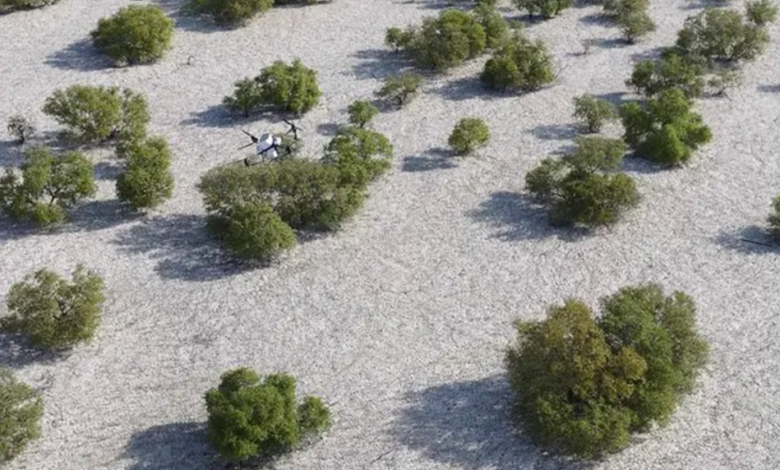
One of Nabat’s standout features is its ability to capture and analyze environmental data through AI and autonomous drones. These drones collect detailed information about mangrove ecosystems, which they use to implement appropriate conservation and restoration strategies. Unlike traditional methods such as general tree planting, Nabat’s data-driven precision means that each restoration effort is tailored to the unique needs of the habitat, increasing the effectiveness and success rate of the efforts.
Nabat uses cutting-edge mapping technologies and precision seeding to plant seeds in the best locations. This not only increases the chances of successful growth, but also reduces waste. According to Reda Nidako, Acting CEO of VentureOne, this targeted approach represents a paradigm shift in restoration efforts:
“We don’t just plant trees; we use AI and mapping technologies to ensure that every step of our conservation and restoration efforts is habitat-specific.
Sustainable Solutions with Minimal Environmental Impact
The use of drones in the restoration process highlights Nabat’s commitment to minimizing human impact on fragile ecosystems. These unmanned systems provide a non-intrusive solution, ensuring that delicate habitats remain undisturbed while addressing challenging or hard-to-reach areas effectively.
“When humans enter these ecosystems, they can inadvertently cause harm. Drones offer a sustainable and precise alternative,” Nidhakou explained.
Mangroves: A Critical Focus
Nabat has chosen mangroves as the focal point for its initial efforts due to their crucial role in protecting coastlines, preserving biodiversity, and combating climate change. Mangroves are highly efficient carbon sinks, capable of storing five to ten times more carbon dioxide than rainforests, making them indispensable in global climate mitigation strategies.
The initiative’s first planting season took place a few months ago, and while the results are still being monitored, the progress has already generated optimism. Nidhakou expressed excitement about Nabat’s potential to transform conservation practices.
Ambitious Expansion Plans
Nabat sees more than just mangroves. The project intends to restore and conserve thousands of hectares of mangroves throughout the United Arab Emirates in the upcoming years in partnership with government agencies. Furthermore, the project intends to broaden its restoration activities to encompass coral reefs, forests, agriculture, and desert regions. Nabat’s dedication to scalable, data-driven conservation initiatives is demonstrated by their all-encompassing strategy.
A Technological Ally in the Fight Against Climate Change
Nidhakou emphasized the transformative role of technology in addressing environmental challenges:
“When used responsibly, technology can become one of nature’s greatest allies in the fight against climate change.”
NABAD stands as a testament to the UAE’s innovative and forward-thinking approach to environmental protection. By combining AI, robotics and environmental expertise, the initiative is poised to have a lasting impact on local and global ecosystems, paving the way for a sustainable future.