UAE Corporates Declare Support for Electric Vehicle Ecosystem
Corporate Leaders Commit to EV Adoption, Supporting UAE's Net Zero 2050 Vision

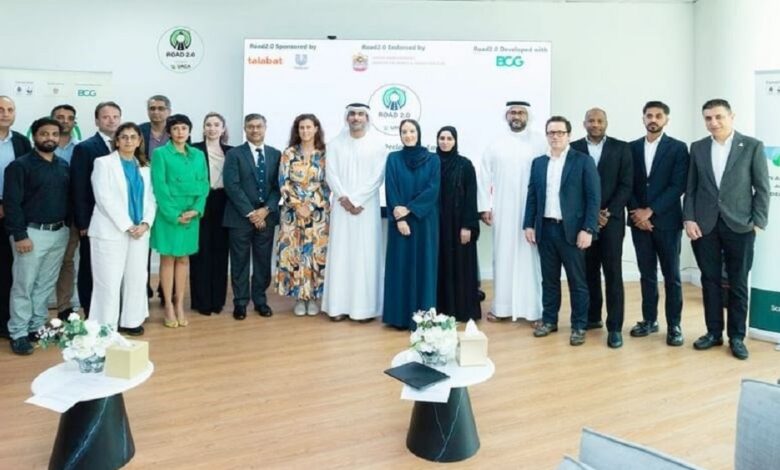
UAE’s Road2.0 Initiative Drives Zero-Emission Transport with Corporate Backing
The UAE’s Road2.0 powered by UACA initiative has garnered widespread support from corporate leaders across sectors to promote zero-emission vehicles (ZEVs), marking a historic step toward sustainable transport. Through a public declaration, participating corporations have committed to adopt electric vehicles (EVs) and collaborate on building a robust EV ecosystem across the UAE. This declaration, promoted by the UAE Alliance for Climate Action (UACA) and convened by Emirates Nature-WWF, is endorsed by the Ministry of Energy and Infrastructure (MoEI) and the Ministry of Climate Change and Environment (MOCCAE), showcasing a coordinated public-private approach to achieving significant emission reductions in commercial transport.
Initiative Objectives and Business Participation
Road2.0 prioritizes EV adoption in corporate fleets in an effort to spearhead the decarbonization of commercial transportation in the United Arab Emirates. Early corporate backers of the program include prominent businesses from a variety of industries, including retail, food and beverage, consumer products, logistics, and Unilever. Participants include Majid Al Futtaim, Schneider Electric, Talabat, and Aramex. Decarbonize 30% of commercial fleet operations by 2030, with complete decarbonization targeted by 2040. This is an ambitious goal established for Road2.0 members.
To support this transformation, the corporate signatories will begin by deploying 90 commercial EVs on UAE roads by the end of 2024. By 2030, they collectively aim to acquire 6,000 ZEVs, with the potential to expand to 20,000 ZEVs by 2040. These vehicles will include diverse options, such as refrigerated trucks, two-wheelers, and light to medium-duty trucks, allowing companies to meet specific operational requirements across various sectors.
Environmental Vision and Government Support
As stated in the Demand Side Management Programme (Green Mobility Strategy) and the Net Zero by 2050 Strategic Initiative, the UAE government’s alignment with Road2.0 is indicative of its larger commitment to a low-carbon economy. Sharif Al Olama, MoEI’s Under-Secretary for Energy and Petroleum Affairs, highlighted the scalable feasibility of EVs in the United Arab Emirates, citing the momentum behind green transportation solutions and the quick development of infrastructure.
Al Olama also underscored the collaborative power of government and corporate sectors in driving economic growth and supporting the nation’s vision of having EVs comprise 50% of UAE vehicles by 2050.
In a similar vein, Mohammad Saeed Al Nuaimi, Under-Secretary of the Ministry of Climate Change and Environment, hailed Road2.0 as a significant step toward a low-carbon economy and embraced business cooperation to accomplish common environmental objectives. In order to lower overall greenhouse gas emissions, the UAE has updated its Nationally Determined Contributions (NDC) to incorporate specific decarbonization objectives for various domestic sectors, most notably transportation.
Corporate Impact and Future Vision
The declaration is backed by major corporate initiatives. Unilever, a leader within the Road2.0 initiative, recently became the first UAE company to integrate an electric van and a 40-ton electric truck into its logistics fleet. This step is part of Unilever’s strategy to cut 40% of its logistics emissions by 2030 relative to 2020 levels, moving towards a net-zero target by 2039. Ahmed Kadous, Unilever’s Head of Supply Chain Personal Care for the Middle East & Turkey, voiced enthusiasm for scaling up EV implementation, emphasizing that cooperation within the Road2.0 network is essential for transforming logistics in the region.
Prospects for Road 2.0 in the Future
The program offers UAE stakeholders a rare opportunity to lead the way in green transportation in the future, said Laila Mostafa Abdullatif, Director-General of Emirates Nature-WWF. Road2.0 is positioned to act as a model for widespread EV adoption, with 90 commercial ZEVs expected to be added to UAE roadways by 2024. Abdullatif urged more businesses to make this pledge, stressing the value of collaborations with distributors, original equipment manufacturers, and third-party logistics companies in promoting the deployment of commercial EVs throughout the United Arab Emirates.
Road2.0 represents a landmark in the UAE’s transition to zero-emission commercial transport. By fostering cross-sector collaboration, Road2.0 is not only addressing environmental challenges but also strengthening the UAE’s leadership in sustainable innovation. This collective action illustrates the UAE’s dedication to climate-conscious development, positioning the nation as a leader in sustainable transport solutions aligned with the ambitious Net Zero 2050 Strategy.