Iran says UAE’s Gargash to Deliver Trump’s Letter
Emirates mediates as Iran rejects U.S. negotiations, nuclear concerns mount

Trump’s Letter to Iran Delivered by UAE’s Gargash Amid Nuclear Standoff
Dubai, March 13 – The ongoing diplomatic tensions between the United States and Iran have taken a new turn as U.S. President Donald Trump’s letter to Iran’s clerical leadership is set to be delivered through Anwar Gargash, the diplomatic advisor to the president of the United Arab Emirates, according to a statement by Iran’s foreign ministry spokesperson on Wednesday.
Trump’s Letter and Iran’s Firm Stand
President Trump said last week that he had written to Iran’s leaders, pushing them to start talks for a new nuclear agreement. However, Ayatollah Ali Khamenei, Iran’s Supreme Leader, categorically rejected the plan, stating that Tehran would not be forced into negotiations under duress.
The firm stance was echoed by Iranian President Masoud Pezeshkian, who dismissed Trump’s approach, stating that Iran would not negotiate under threats. “Do whatever the hell you want,” Pezeshkian said in response, as reported by Iranian state media.
Gargash’s Meeting with Iranian Officials
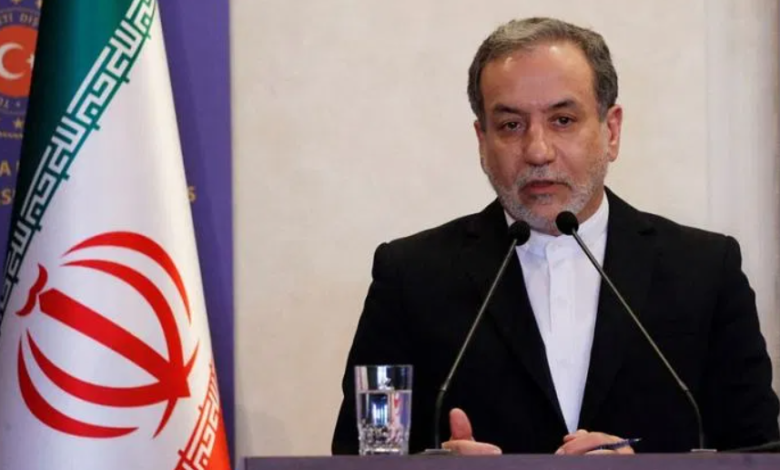
According to Iranian state media reports, Anwar Gargash was scheduled to meet with Iran’s Foreign Minister, Abbas Araqchi, on Wednesday to discuss the contents of Trump’s letter. However, Iranian foreign ministry spokesperson Esmaeil Baghaei refrained from disclosing specific details about the nature of the discussions.
The meeting is significant, given that the UAE has played a mediating role in regional affairs and has maintained diplomatic channels with both Washington and Tehran. However, it remains unclear whether Iran will engage in any discussions following this diplomatic gesture.
U.S. Pressure and Iran’s Response
The Trump administration has persisted in its “maximum pressure” approach to Iran, even though it has indicated that it is open to negotiating a solution. The goal of this campaign, which was started during Trump’s first term, is to cut off Tehran’s oil exports and distance it from the world economy.
Trump reintroduced harsh economic penalties on Iran in 2018 and withdrew the United States from the 2015 nuclear deal, officially known as the Joint Comprehensive Plan of Action (JCPOA). Tensions between the two countries increased when the Iranian regime retaliated a year later by violating important nuclear constraints imposed under the agreement.
Concerns Over Iran’s Nuclear Program
Iran has consistently denied any intention to develop nuclear weapons, yet its stockpile of enriched uranium has raised concerns globally. Iran has uranium enrichment levels as high as 60%, which is dangerously near to the 90% level needed for weapons-grade material, according to a recent study from the International Atomic Energy Agency (IAEA).
In retaliation, the U.N. Security Council met behind closed doors on Wednesday to discuss Iran’s nuclear developments.
. The meeting was requested by six of the Council’s fifteen members—France, Greece, Panama, South Korea, Britain, and the U.S.—who have expressed alarm over Iran’s growing stockpile of high-purity uranium.
Iran’s Reaction to the U.N. Security Council Meeting
Iran’s chief nuclear negotiator, Abbas Araqchi, criticized the Security Council meeting, calling it a “new and bizarre” process that raised doubts about the sincerity of the countries involved. “This meeting questions the goodwill of the states requesting it,” he said, as quoted by state media.
Despite the tensions, Araqchi confirmed that Iran is still engaged in ongoing nuclear talks with European nations, including France, Britain, and Germany. Additionally, a meeting with Russia and China regarding Iran’s nuclear program is scheduled to take place in Beijing on Friday.
However, Araqchi warned that any pressure exerted by the U.N. Security Council or the IAEA’s Board of Governors would undermine the credibility of the negotiations. “If they choose to pressure us instead of engaging in fair discussions, the legitimacy of these talks will come into question,” he said.
The fact that Trump sent his letter to Iran through the UAE’s diplomatic channels suggests that he is making an attempt to start a dialogue. Iran’s adamant resistance, however, indicates that meaningful talks are unlikely to occur very soon. It is doubtful if a nuclear deal would be revived given the current U.S. sanctions, Iran’s developing nuclear program, and the escalating tensions in the area. Whether diplomatic efforts can break the deadlock or if relations between the two countries worsen will be determined in the coming weeks.