The Hidden Rivalry between Saudi Arabia and the UAE
The two nations appear allied but are becoming regional rivals

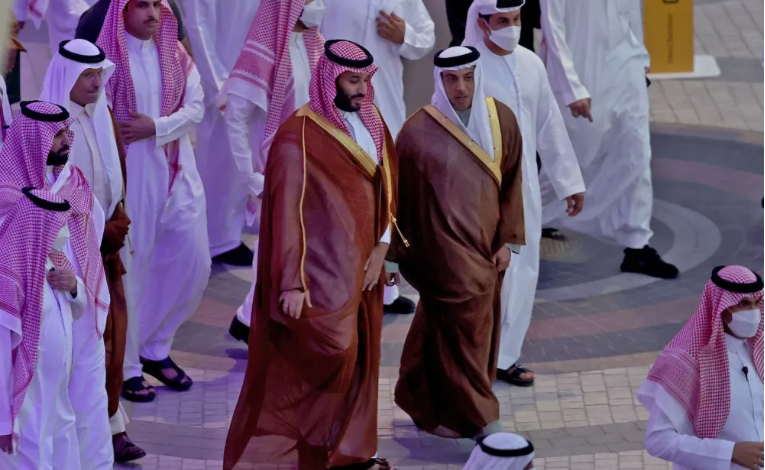
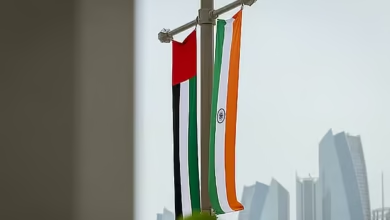
The Israel-Hamas conflict unfolded against a backdrop of a perceived regional trend towards peaceful coexistence. The alliance between Saudi Arabia and the United Arab Emirates (UAE), exemplified by the apparent friendship between their leaders Mohammed bin Salman and Mohamed bin Zayed, aimed at countering Qatar’s growing influence. Their joint actions include a blockade against Qatar in 2017 and a shared military campaign against the Iranian-backed Houthis in Yemen since 2014. Both nations have pursued a more independent foreign policy, diverging from their traditional alliance with the United States.
However, beneath this apparent alliance lies a subtle struggle as Saudi Arabia and the UAE compete for leadership within the Arab world. The geoeconomic competition between them encompasses a significant rivalry for foreign investment. This rivalry traces back to 2009 when Abu Dhabi opposed the proposed location of the Gulf Cooperation Council (GCC) central bank in Riyadh, affecting the bank’s establishment. Between 2012 and 2022, the UAE attracted nearly 3.5 times more investment-to-GDP than Saudi Arabia, with Dubai becoming the preferred location for around 70 percent of Middle Eastern headquarters of major multinational companies. The surge in oil prices in 2022, due to the Russian invasion of Ukraine, propelled the Saudi economy to grow by 8.7 percent, attracting substantial capital. Saudi Arabia actively encouraged foreign companies in the Persian Gulf area to relocate their headquarters, issuing warnings of discontinued business relations for non-compliance.
The competition extends to energy politics, notably within OPEC+. A dispute emerged in 2021 when the UAE rejected a Saudi-led plan to prolong production cuts. Although a resolution was quickly achieved, rumors circulated about Abu Dhabi’s objection to Riyadh’s dominance within OPEC+ and potential withdrawal from OPEC.
Global prestige is another arena of competition. Both countries strategically invest in hosting international gatherings to enhance their soft power. Saudi Arabia initiated the Future Investment Initiative conference, while Abu Dhabi hosted the World Investment Forum. After the UAE’s Expo 2020 in Dubai, Saudi Arabia secured the rights to host Expo 2030, and Dubai hosted the annual U.N. climate change conference. This commitment to hosting continues, with Abu Dhabi set to host the World Trade Organization ministerial conference in February.
Additionally, both nations invest in sports to elevate their profiles. Riyadh committed over $6.3 billion in sports agreements since early 2021, surpassing the total expenditure of the preceding six years. Dubai’s reputation for its open, cosmopolitan society faced competition as Riyadh successfully hosted MDLBEAST Soundstorm in December 2023, marking the largest music festival in the Middle East. Collectively, these endeavors reflect deliberate efforts by Saudi Arabia and the UAE to reshape their international image and garner positive perceptions globally.