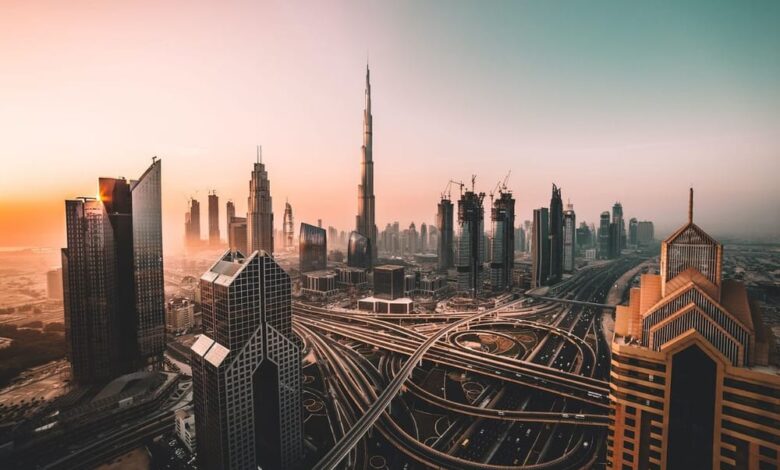
The narrative explores the remarkable growth of Dubai’s public transport, reflecting the city’s swift progress and dedication to modernization and sustainability. From its modest origins, Dubai’s transportation network has evolved into a globally renowned, cutting-edge system.
This article delves into the incredible journey of Dubai’s public transportation, chronicling its development from basic routes to its present state-of-the-art infrastructure.
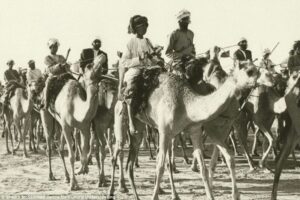
Initially, Dubai’s transportation system relied heavily on traditional modes. Camels, known as the “ships of the desert,” were pivotal for navigating the challenging desert terrain, serving as both transport and vital assets for survival among nomadic tribes. Furthermore, owing to Dubai’s strategic position along the Arabian Gulf, traditional water routes were pivotal. Dhows, the traditional sailing vessels, were indispensable for trade, fishing, pearl diving, and commerce, playing a vital role in transportation and connectivity.
Dubai’s transport landscape underwent a significant shift during the 1960s and 1970s, initiating a transformative phase. The establishment of Dubai International Airport in 1960 marked the city’s aspiration to become a global nexus. This move represented Dubai’s ambitions as a pivotal center for international trade and tourism. Simultaneously, the inception of structured public transport emerged with the launch of bus services in 1968. Despite its modest scale, this inaugural network laid the groundwork for Dubai’s expansive and sophisticated public transportation system seen today.

During the 1970s, pivotal strides in infrastructure unfolded. The inception of the single-carriageway road connecting Dubai and Ras Al Khaimah in 1971 marked the advent of contemporary road systems in the region. However, this road, albeit a crucial advancement, lacked contemporary safety features, rendering travel, particularly at night, considerably hazardous. Another landmark was the construction of the Dubai to Abu Dhabi road from 1970 to 1973. Initially challenging due to factors like inadequate lighting and the risk of wandering camels, this route substantially eased inter-emirate land travel.
During the 1990s and early 2000s, the UAE underwent a rapid evolution in its transportation infrastructure, reshaping the nation’s travel and trade corridors significantly.
This era saw a comprehensive strategy to revamp road systems across the UAE. In the mid-1990s, notable enhancements were made to existing roads, notably the Dubai to Abu Dhabi route. This critical thoroughfare underwent expansion and modernization, featuring widened lanes and the introduction of flyovers replacing traditional roundabouts. These upgrades not only reduced travel durations between Emirates but also enhanced safety and comfort for travelers, signaling a transition from traditional transport to a more sophisticated infrastructure.
The revamped road network not only improved inter-emirate connectivity but also extended the UAE’s influence into neighboring countries, streamlining cargo transport and trade. This development fortified the UAE’s position as a pivotal trade hub in the Gulf region, facilitating smoother commerce, attracting enterprises, and fostering tourism, bolstering the nation’s economic advancement.
Simultaneously, significant urban growth unfolded, characterized by city expansions and the construction of new highways, bridges, and tunnels. Each project represented a stride toward future readiness, ensuring the UAE’s transportation infrastructure could meet the demands of its swiftly growing economy and population.