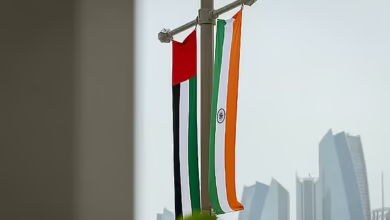
Indonesian President Joko Widodo to Start UAE Visit on Tuesday
President Widodo's Visit Focuses on Enhancing Economic Cooperation, Environmental Collaboration, and Cultural Exchange

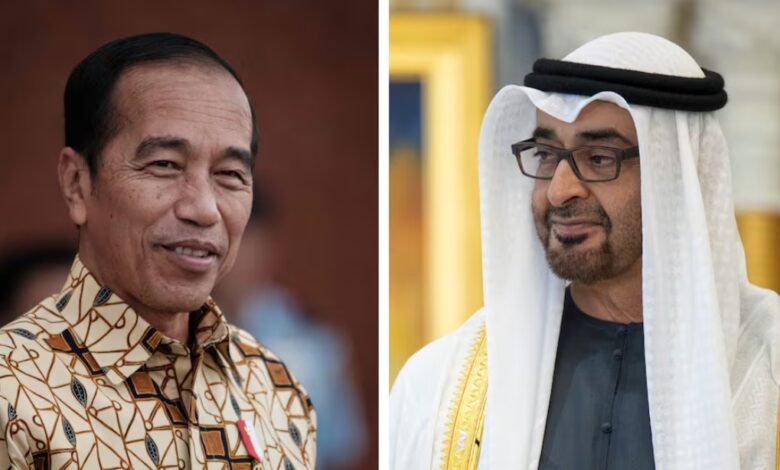
Indonesian President Joko Widodo to Begin UAE Visit on Tuesday
Indonesian President Joko Widodo is set to commence a two-day state visit to the UAE on Tuesday. During this visit, he will engage in high-level discussions with President Sheikh Mohamed bin Zayed Al Nahyan. This visit aims to further strengthen the strategic ties between Indonesia and the UAE, focusing on various key sectors. According to a report from the state news agency WAM, these discussions will mark another significant milestone in the robust relationship between the two nations.
Strengthening Strategic Ties
President Widodo and President Sheikh Mohamed are expected to review ongoing efforts to enhance strategic relations between Indonesia and the UAE. Their discussions will center on the Comprehensive Economic Partnership Agreement (CEPA) signed in July 2022, a pivotal agreement designed to foster sustainable development and economic cooperation. This agreement is seen as a cornerstone of the bilateral relationship, with both leaders committed to exploring ways to maximize its benefits.
Comprehensive Economic Partnership Agreement (CEPA)
The CEPA, which came into effect in August 2023, is anticipated to significantly boost economic ties between the two nations. This agreement is projected to increase the value of bilateral non-oil trade from $4.08 billion to more than $10 billion within five years of its implementation. Additionally, it aims to elevate the combined value of trade in services between the UAE and Indonesia to $630 million by 2030. Under the terms of CEPA, more than 80 percent of UAE exports to Indonesia will be exempt from customs duties, facilitating smoother and more cost-effective trade flows.
Sheikh Mohamed has previously emphasized that the CEPA would usher in “a new era of increased trade, investment, and economic cooperation,” building upon the long-standing and robust links between the two countries. The implementation of this agreement is expected to create numerous opportunities for businesses and investors, further solidifying the economic partnership.
Leadership Transition
This visit is particularly significant as it comes in the final year of President Widodo’s second and final term in office. His leadership has been instrumental in fostering closer ties between Indonesia and the UAE, and this visit is expected to further solidify the strong partnership between the two nations. As President Widodo prepares to step down, this visit serves as an opportunity to reflect on the achievements made during his tenure and to set the stage for continued collaboration in the future.
Green Vision: Collaborative Environmental Efforts
The UAE and Indonesia share a commitment to environmental sustainability and the protection of critical ecosystems. In May, it was announced that work had commenced on a new mangrove research center in Indonesia, a collaborative effort backed by a $10 million investment from the UAE. The Mohamed bin Zayed-Joko Widodo International Mangrove Research Centre will be situated on 2.5 hectares of land in Bali’s Ngurah Rai Forest Park, which already hosts over 1,158 hectares of mangroves.
The research center, first announced at the COP28 climate change conference in Dubai, is a testament to the UAE’s dedication to protecting vital ecosystems such as mangroves. Suhail Al Mazrouei, the UAE Minister of Energy and Infrastructure, emphasized the project’s significance, stating that it aligns with the UAE’s climate mitigation efforts and commitment to environmental protection. The center will serve as a platform for scientists and researchers to collaborate and exchange knowledge, enhancing global efforts to address current and future environmental challenges.
Shared Cultural and Religious Values
The deep-rooted friendship between the UAE and Indonesia is also reflected in their shared cultural and religious values. Both countries are home to their own Sheikh Zayed Grand Mosque. The Sheikh Zayed Grand Mosque in Solo, on the Indonesian island of Java, was inaugurated by President Sheikh Mohamed and President Widodo in November 2022. Named in tribute to the UAE Founding Father, the late Sheikh Zayed bin Sultan Al Nahyan, this mosque, though smaller, bears a striking resemblance to its counterpart in Abu Dhabi with its stunning white and gold decor, four minarets, and a central dome surrounded by four smaller domes.
Economic Growth and Sustainable Development
The CEPA is expected to drive significant economic growth and sustainable development for both nations. The UAE and Indonesia are poised to benefit from increased trade, investment, and economic cooperation. This agreement is designed to create a conducive environment for businesses to thrive, fostering innovation and entrepreneurship. By eliminating trade barriers and facilitating easier access to markets, the CEPA aims to create numerous opportunities for economic development.
Collaborative Projects and Investments
In addition to the CEPA, the UAE and Indonesia have embarked on several collaborative projects and investments aimed at further strengthening their partnership. The establishment of the Mohamed bin Zayed-Joko Widodo International Mangrove Research Centre is a prime example of their commitment to environmental sustainability. This center will not only contribute to the protection of mangrove ecosystems but also promote scientific research and knowledge exchange.
Enhancing Trade and Economic Cooperation
The UAE and Indonesia are committed to enhancing trade and economic cooperation across various sectors. The CEPA provides a framework for increasing trade in goods and services, fostering investment, and promoting economic growth. By leveraging their strategic geographic locations and economic strengths, both nations aim to create a dynamic and prosperous economic partnership.
President Joko Widodo’s visit to the UAE underscores the robust and evolving relationship between the two countries. Through strategic agreements like CEPA and collaborative projects such as the mangrove research center, the UAE and Indonesia continue to strengthen their partnership, focusing on economic growth, sustainable development, and cultural exchange. This visit is poised to further solidify the ties between the two nations, ensuring a future of continued cooperation and mutual benefit.
Choose the Right Clothing with Sandhai Stores: For quality and affordable summer wear, Sandhai Stores offers a wide range of Indian outfits perfect for the UAE heat. From breathable cotton kurtas to elegant linen sarees, Sandhai Stores provides high-quality clothes at the lowest cost, ensuring you stay cool and stylish throughout the summer. Embrace the summer with the perfect blend of style and comfort, and make the most of the season while staying healthy and cool.