


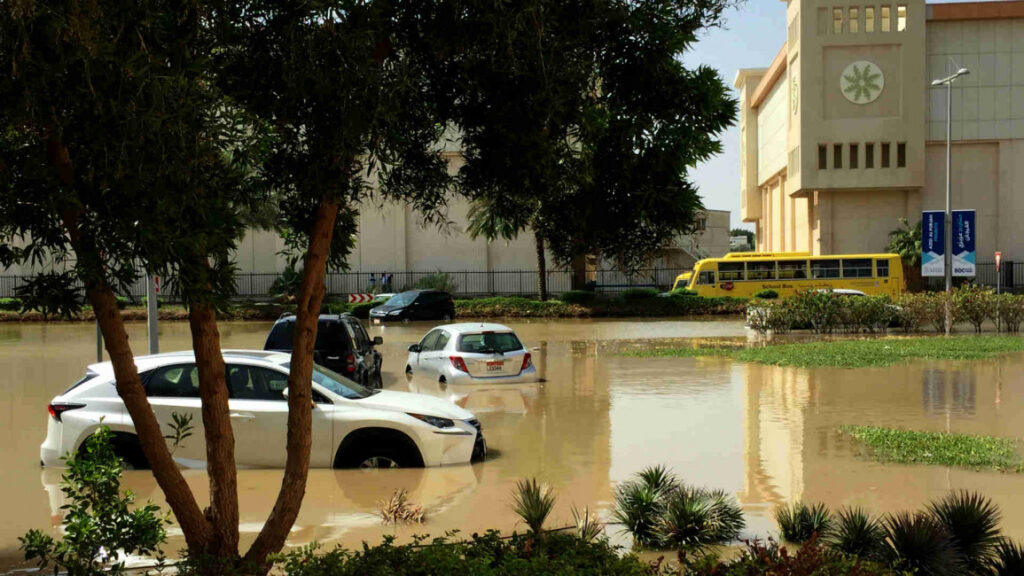
UAE Addresses Health Challenges Arising from Flood Contamination
Following heavy rains and floods in the United Arab Emirates (UAE), the nation’s health ministry has reported a small number of individuals exhibiting symptoms associated with contaminated water. This revelation comes amidst a broader context of unprecedented weather events that have significantly impacted the region.
The statement released by the health ministry, disseminated through the state news agency, highlights the emergence of symptoms indicative of waterborne illness among a limited number of individuals. While the exact figures and specifics of treatment remain undisclosed, the ministry acknowledges the necessity of hospital care for affected individuals. However, crucial details regarding the contaminants responsible for the illness remain unspecified, leaving room for speculation and concern within the community.
The UAE experienced record-breaking rainfall on April 16, leading to widespread flooding across various regions, including major urban centers like Dubai and northern cities. Tragically, the floods resulted in the loss of four lives, underscoring the severity of the natural disaster and its profound impact on the population.
In response to the devastation wrought by the unprecedented rainfall, the UAE government announced a substantial allocation of $544 million to facilitate the repair and reconstruction of homes belonging to Emirati families. Prime Minister Sheikh Mohammed bin Rashid al-Maktoum emphasized the administration’s commitment to learning from this calamitous event, citing the approval of two billion dirhams to address the damage incurred by citizens’ residences.
To streamline the process of recovery and rehabilitation, ministerial committees were established to oversee compensation distribution and assess infrastructure damage. These committees operate in coordination with federal and local authorities, reflecting a concerted effort to navigate the complexities of post-disaster management effectively.
However, the aftermath of the storm revealed significant challenges in the realm of crisis management and service provision. The disruption caused by the heavy rainfall severely impacted daily life in Dubai, resulting in widespread waterlogging, road closures, and inundated homes. The operational capacity of Dubai airport, a vital international hub, was also significantly impaired, with thousands of flights cancelled or diverted in the wake of the deluge.
Prominent Emirati analyst Abdulkhaleq Abdulla publicly criticized the handling of the crisis, citing systemic deficiencies and lapses in crisis management as unacceptable. This sentiment underscores the urgency of addressing structural vulnerabilities and enhancing resilience in the face of future natural disasters.
Furthermore, experts such as climatologist Friederike Otto have drawn attention to the role of human-induced climate change in exacerbating extreme weather events. Otto suggests that the intensity of the rainfall experienced in the UAE may be attributable, at least in part, to anthropogenic factors, necessitating proactive measures to mitigate the adverse impacts of climate variability.
The confluence of heavy rains, flooding, and subsequent health concerns in the UAE underscores the multifaceted challenges posed by climate change and the imperative for adaptive and resilient governance frameworks to safeguard communities in an increasingly volatile environment.