


UAE Orders Trial for Bangladeshi Nationals Arrested Over Job Quota Protests
Introduction: The United Arab Emirates (UAE) has taken significant legal action against several Bangladeshi nationals who were detained for their involvement in protests against the job quota system in Bangladesh. The UAE’s state media reported that the individuals face multiple charges, including inciting unrest, obstructing law enforcement, and damaging property. Authorities have also ordered their pretrial detention as investigations continue.
Details of the Arrests and Charges:
The Bangladeshi nationals were arrested in the UAE following demonstrations that took place in various locations across the Gulf country. These protests were in response to a controversial job quota system in Bangladesh, which reserved up to 30% of government jobs for relatives of veterans who fought in the 1971 Bangladesh Liberation War. The system had been a point of contention and led to widespread demonstrations in Bangladesh, which subsequently affected the Bangladeshi expatriate community in the UAE.
According to the Emirates News Agency (WAM), the charges against the detained individuals include:
- Gathering in Public Places: The accused are charged with unlawfully assembling in public spaces, a violation of UAE regulations that prohibit unauthorized gatherings.
- Inciting Unrest: The individuals are alleged to have incited unrest and provoked disturbances, which are considered serious offenses under UAE law.
- Obstructing Law Enforcement: They are also charged with obstructing law enforcement efforts during the protests, which further complicates their legal situation.
- Causing Harm and Damaging Property: The protests allegedly resulted in harm to individuals and damage to property, adding to the severity of the charges.
Legal Context and Political Climate:
The UAE has strict laws governing public demonstrations and political activities. Political parties and labor unions are banned, and the freedom of speech is heavily restricted. Most major media outlets in the UAE are state-owned or state-affiliated, limiting the scope for dissenting voices and critical reporting. These regulations reflect the country’s approach to maintaining public order and controlling political expression.
Pretrial Detention and Investigation:
Following the charges, the UAE’s Public Prosecution has ordered the pretrial detention of the Bangladeshi nationals. This step is a precautionary measure while further investigations are conducted into their activities and the specifics of their involvement in the protests. The decision to detain the accused before the trial underscores the seriousness with which the UAE is addressing this case.
Background on the Protests:
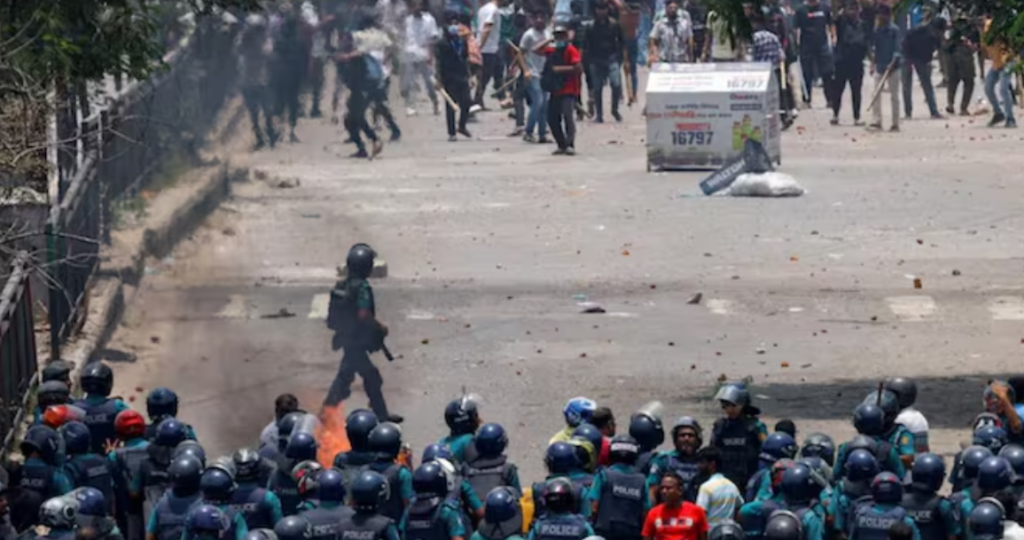
The protests that led to these arrests were initially sparked by discontent over the job quota system in Bangladesh. Demonstrators argued that the system was discriminatory and unfair, as it reserved a significant portion of government jobs for the relatives of veterans. The protests in Bangladesh intensified, leading to clashes with authorities and a heightened response from the expatriate community, including those living in the UAE.
In recent developments, the Bangladesh Supreme Court scaled back the controversial quota system, marking a partial victory for the protesters. However, the legal and political ramifications of the system continue to affect both domestic and international communities.
Impact on UAE-Bangladesh Relations:
The legal actions in the UAE may have implications for diplomatic relations between the UAE and Bangladesh. The situation highlights how international political issues can influence the legal and social environments of expatriate communities. It also reflects the UAE’s stance on managing political activism and public dissent among foreign nationals within its borders.
The trial of the Bangladeshi nationals in the UAE underscores the country’s stringent regulations on public protests and political expression. As the legal process unfolds, further updates are expected regarding both the legal outcomes for the accused and the broader impact on international diplomatic relations and expatriate communities. The situation serves as a reminder of the complex interplay between national laws, international political issues, and the experiences of migrant communities.