


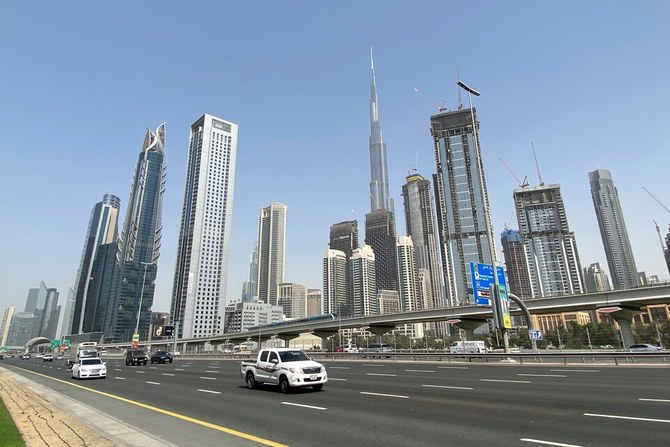
UAE Non-Oil Sector: Slowing Growth Amid Challenges
The UAE’s non-oil private sector growth showed stability in July but marked the slowest improvement in nearly three years, according to an economy tracker. The S&P Global Purchasing Managers’ Index (PMI) for the Emirates decreased to 53.7 in July from 54.6 in June. Performance was impacted by competitive conditions, rising price pressures, and capacity overloads.
Although the index remained above the 50 expansion mark, it fell below its long-run average of 54.4. David Owen, chief economist at S&P Global Market Intelligence, noted, “The drop in the UAE PMI signals that non-oil sector growth is on a downward trend in 2024.” Business capacity issues contributed to this decline, with firms struggling to resolve supply and administrative challenges.
UAE Minister of Economy Abdulla bin Touq predicted in March that the Emirates would grow by 5 percent this year, driven by robust expansion in the non-oil sector and increased foreign direct investment. Currently, the non-oil economy accounts for 73 percent of the UAE’s gross domestic product.
Rising Costs and Demand in the UAE
Companies in the UAE faced accelerated price inflation in July, experiencing the fastest rise in input costs in two years. Higher input prices were partially passed on to customers, with output charges increasing for the third month in a row. Despite rising inflows of new work and ongoing projects, business activity growth slowed for the third consecutive month, marking the lowest rate in three years.
Demand conditions remained favorable, with sales rising sharply. However, heavy competition caused some firms to see a drop in new order volumes. The UAE’s non-oil businesses attracted international interest, with exports increasing at the second fastest pace in nine months. To retain clients, non-oil companies often took on more work than they could manage. Selling prices rose again in July, reaching a six-year high for the second month, while vendor delivery times improved.
Although delivery times improved and purchases increased, firms had to dip into their stocks to resolve issues. This could challenge growth if inventories become depleted. Survey participants expressed optimism about future growth in the UAE’s non-oil businesses over the next 12 months, despite confidence slipping to its lowest level since January. Owen remarked, “The PMI suggests that the non-oil sector is expanding solidly and could strengthen if companies manage their workloads.” Hiring continued as firms aimed to increase staff capacity.
Dubai’s PMI also fell to 52.9 in July from 54.3 in June, marking its lowest level in two-and-a-half years. Competitive conditions and low orders contributed to this softer upturn.
Egypt: Approaching Growth Territory
Another report by S&P Global showed Egypt’s PMI at 49.7 in July, the second highest in nearly three years but slightly lower than 49.9 in June. Egypt’s non-oil economy hovered near the growth-contraction line, with output and new business declining at marginal rates. The PMI survey indicated employment growth in July and a slight recovery in output expectations.
“The Egyptian non-oil economy seems on the verge of expansion, with the July PMI just below 50,” Owen commented. “Some firms noted improving economic conditions, particularly through rising export demand, although market conditions remained weak elsewhere.” Price pressures among Egyptian non-oil firms stayed low in July compared to recent years. However, input costs rose at their steepest pace since March, signaling potential inflationary pressures.
Non-oil businesses in Egypt reported a slight but persistent contraction in activity levels at the start of the third quarter. Weakening sales and price pressures drove this contraction, with the decline rate slightly accelerating from June. The report noted that almost 9 percent of surveyed firms experienced a sales decline, while 7 percent reported expansion. New export orders increased for the third consecutive month, driven by improved demand for Egyptian non-oil goods from foreign markets. Job creation also saw a slight uptick in July, reversing a fractional decline in June, as companies hoped for improved conditions.
Kuwait: Maintaining Momentum in the Non-Oil Sector
Kuwait’s non-oil private sector started the second half of the year positively, driven by a rise in new orders, as reported by S&P Global. Kuwait’s PMI in July was 51.5, almost unchanged from 51.6 in June. Andrew Harker, economics director at S&P Global Market Intelligence, stated, “Firms in Kuwait have used advertising and competitive pricing to secure new business and expand output in July.”
Despite increasing input prices, including a record rise in staff costs, firms often offered discounts. New orders continued to grow at a solid pace in July, despite the rate of growth easing to a 10-month low. Orders from regular customers helped Kuwaiti non-oil companies expand business activity again in July.
Challenges finding skilled staff to meet growing demand remained a key issue for non-oil firms in Kuwait. Harker noted, “Finding suitably skilled staff was a key challenge for firms in July. These difficulties meant employment remained unchanged, resulting in a further buildup of outstanding business.” Firms hope to raise employment in the coming months to expand output and manage workloads. The survey reported that non-oil firms in Kuwait remained confident about increasing output over the coming year, although sentiment eased to its lowest since February.