


UAE Denies Supplying Chinese Arms to Sudan’s RSF Amid Rising Tensions
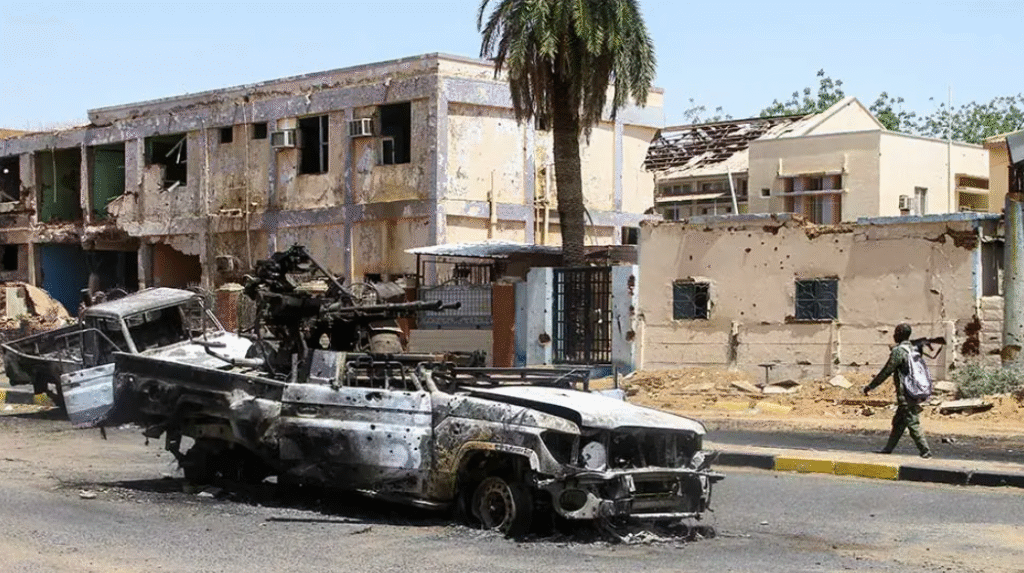
The United Arab Emirates has strongly denied accusations that it supplied Chinese-made weaponry to the Rapid Support Forces (RSF), a paramilitary group currently locked in a deadly power struggle with Sudan’s military. The denial comes in response to an Amnesty International report, released Thursday, which claimed to have verified evidence of Chinese arms used by the RSF in conflict zones such as Khartoum and Darfur.
Salem Aljaberi, Assistant Minister for Security and Military Affairs, addressed the allegations via social media, labeling them as “baseless” and lacking credible proof. He reaffirmed that the UAE “strongly rejects the suggestion that it is supplying weaponry to any party involved in the ongoing conflict in Sudan.” His comments were echoed by the UAE Ministry of Foreign Affairs, which posted an official statement on X (formerly Twitter).
According to Amnesty International’s assessment, RSF fighters were using weapons like 155mm AH-4 howitzers and Chinese GB50A guided bombs. The human rights group claimed that the UAE had previously purchased these howitzers from China, suggesting a potential connection, and cited procurement statistics from the Stockholm International Peace Research Institute (SIPRI).
However, Aljaberi pushed back firmly, stating that the weapons in question are widely available on the international market and that UAE’s ownership does not equate to responsibility for their use in Sudan. He further criticized the Amnesty report as “misleading.”
The accusation adds to a growing list of concerns raised by the United Nations, United States, and other NGOs about the UAE’s alleged involvement in Sudan’s internal conflict. However, Abu Dhabi has continuously denied any military involvement, highlighting its dedication to regional peace and stability.
In the meantime, the RSF has intensified its drone attacks on strategic army-held locations in response to recent fighting setbacks. For six days in a row, Port Sudan, the nation’s final significant military-held stronghold and a vital hub for the transfer of relief, has been under heavy bombardment. Important infrastructure has apparently been harmed by the strikes, including the electrical grid, the major gasoline storage facility, and the main international airport.
Concern over these attacks has spread around the world. UN Secretary-General António Guterres said that they might make humanitarian relief efforts in a war-torn nation even more difficult.More than 13 million people have been displaced, and tens of thousands killed, making Sudan one of the world’s most severe humanitarian crises.
Tensions between Sudan’s military government and the UAE reached a boiling point when Sudanese Defence Minister Yassin Ibrahim publicly accused the UAE of violating the nation’s sovereignty by supporting the RSF. In response, Sudan severed diplomatic ties with Abu Dhabi. But in addition to denying the accusations, the UAE disputed the legitimacy of Sudan’s globally acknowledged government.
A genocide complaint brought by Sudan against the United Arab Emirates was dismissed by the International Court of Justice (ICJ) this week, further escalating the controversy. According to the ICJ, the UAE is immune from Article 9 of the Genocide Convention, hence it lacked jurisdiction. The decision was praised by UAE official Reem Ketait, who described it as “clear and decisive.”
The UAE is adamant about rejecting any role in the Sudanese war, claiming that the claims are politically driven and unbacked by evidence, despite the escalating tensions and grave accusations.