


Turkey’s Strategic Role in Shaping Syria’s Future Post-Assad
The world was taken aback by the abrupt fall of Bashar al-Assad’s government in Syria, which happened in just 11 days, and given Turkey a major say in how Syria develops in the future. Nonetheless, Turkish authorities are being cautious, determined not to make the same mistakes they did during the Arab Spring in the 2010s, which caused extensive unrest in the area.
Turkey is acutely aware that Syria, with its population of 20 million, requires external support to stabilize and avoid fragmentation. The experiences of Libya, which fractured into warring factions, and Egypt, where a brief democratic period was followed by a military coup, have shaped Turkey’s cautious stance. Turkish President Recep Tayyip Erdogan has emphasized the need to engage regional allies, particularly Gulf nations, in securing long-term stability in Syria, noting the importance of Saudi Arabia and the UAE’s perspectives on the country’s future.
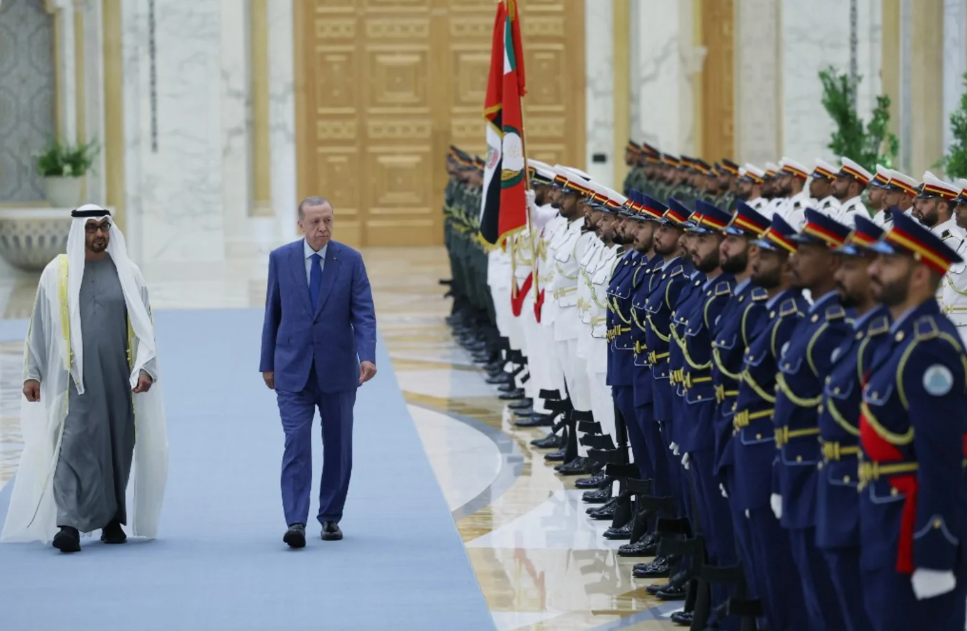
Turkey seeks to engage the Gulf nations—especially the UAE, which has been hesitant toward Islamist movements like the Muslim Brotherhood—to align on Syria’s reconstruction. According to a Turkish official, President Erdogan considers the concerns of the UAE and Saudi Arabia to be important and believes their advice is essential in determining the future governance of Syria. The UAE is ready to participate in this discussion, as Gulf leaders are now ready to work with Turkey and the HTS-led government to stabilize Syria, a shift in regional dynamics.
Ankara has long denied providing direct support to Hay’at Tahrir al-Sham (HTS), a group that once had ties to al-Qaeda and played a key role in defeating Assad’s forces and seizing parts of Damascus. However, Turkey’s influence over HTS is well-established, and Foreign Minister Hakan Fidan made it clear that Turkey has an intimate understanding of the group’s workings, suggesting a behind-the-scenes role in guiding HTS’s actions in the region.
Turkey has recently sought support from a range of international actors, including the European Union, the United States, the United Kingdom, France, Germany and regional participants in the Arab Contact Group. The summit in Aqaba, Jordan, called for the creation of an inclusive, non-sectarian and representative Syrian administration, emphasizing the importance of protecting the rights of minorities and women.
This international consensus supports Syria’s reintegration into the regional fold in a way that does not provoke new conflicts.
Despite these diplomatic efforts, Turkey’s ultimate goal for Syria is to establish a neutral state that does not pose a security threat to other countries, including Israel and Iran. Turkey has specifically demanded that Israel stop airstrikes on Syrian military targets, while encouraging Iran to play a positive role in Syria’s reconstruction, rather than aiming for regional hegemony. Fidan and other Turkish officials stressed the importance of regional countries such as Saudi Arabia, Qatar and Turkey working together to avoid external interventions that could exacerbate the problems.
Turkey’s outreach to the UAE has prompted a shift in rhetoric from Gulf leaders, who had once been strong proponents of Assad’s return to the Arab League. The UAE’s engagement with the HTS-led government signals a growing willingness to invest in Syria’s recovery, with experts noting that Abu Dhabi is positioning itself as a key player in the economic reconstruction of Syria. This shift highlights the potential for a more cooperative regional order, where economic investments and diplomatic engagement take precedence over longstanding rivalries.
Reconstruction of Syria, however, will require significant financial contributions from Gulf nations and Western powers. European Commission President Ursula von der Leyen recently visited Ankara, signaling the EU’s increased engagement in Syria’s early recovery, which includes providing vital services like electricity and water.In order to get supplies to Syria immediately, the EU has also started a humanitarian air bridge.
The Russian military presence in Syria remains a serious issue. Russia has had two military installations there since 2015 to support Assad.
Some EU member states are calling for Russia to withdraw from Syria before pledging support for the new Syrian government. Moscow is reportedly in negotiations with HTS to determine the future of its military presence, with the possibility that HTS could be removed from the UN Security Council’s terrorism list—a move that Russia could facilitate by using its veto power.
Turkey hopes that Russia and Iran will recognize the HTS-led administration, reopening their embassies in Damascus and contributing to the broader stabilization efforts. Ankara’s long-term goal is for a unified and neutral Syria, one that doesn’t pose a threat to its neighbors and is free from external domination or conflict.
This complex geopolitical situation underscores Turkey’s central role in Syria’s future, balancing regional alliances, international diplomacy, and the management of diverse local actors to guide Syria toward a more stable and peaceful future.