


OpenAI and UAE Launch Stargate UAE, a Major AI Data Center in Abu Dhabi
OpenAI’s larger “OpenAI for Countries” program includes a partnership with the United Arab Emirates to build Stargate UAE, a vast new AI data center in Abu Dhabi. This ambitious project, which was unveiled Thursday, is a significant investment in artificial intelligence infrastructure by the United Arab Emirates.
There are various reasons why this collaboration is important. First, as the first nation to do so, the UAE is making history by obtaining ChatGPT Plus memberships for all of its citizens. Second, 200 megawatts are anticipated to be operational next year, and the new AI computer cluster will have a one gigawatt capacity. This cluster will form a crucial segment of a larger 5 gigawatt data center in Abu Dhabi, a venture recently unveiled by former U.S. President Donald Trump and UAE’s President Sheikh Mohammed bin Zayed.
The initiative also features a unique bilateral investment model: for every dollar the UAE invests in Stargate UAE and the wider data center project, it will match that investment dollar-for-dollar in U.S.-based AI infrastructure, including Stargate. According to sources, the UAE’s AI investment vehicle, G42, could invest up to $20 billion in total, with $8–10 billion of that going to projects in the US and the Gulf of Mexico.
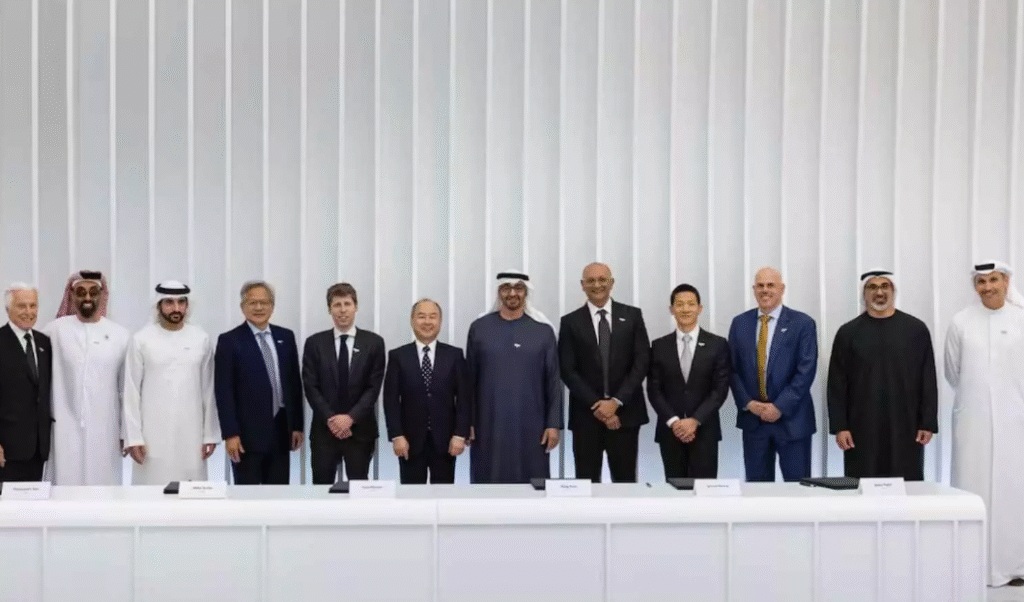
Leading tech companies including Oracle, Nvidia, Cisco, SoftBank and G42, an AI company backed by Microsoft and others, are joining the strategic partnership. The plan has received approval from the US government, which monitors such international technology partnerships through export control regulations.
The development is part of a broader push launched during Trump’s Gulf visit to establish a new AI alliance between the US and the Middle East’s energy-rich countries. The partnership is seen as a way to counter China’s growing technological footprint in the region while strengthening US influence. However, some critics are concerned that sending cutting-edge US semiconductor technology to countries with strong ties to China could inadvertently allow China access to cutting-edge technology.
OpenAI CEO Sam Altman expressed enthusiasm about the project, highlighting its global significance: “By establishing the world’s first Stargate data center outside the U.S. in the UAE, we are turning an ambitious vision into reality. This initiative is a vital step toward ensuring that breakthroughs in fields like medicine, education, and energy arise from a wider range of regions and benefit humanity globally.”
Chris Lehane, OpenAI’s Vice President of Global Affairs, told Axios that the deal is part of a broader strategy to bring more countries into the “U.S. AI ecosystem,” noting the unique position of the U.S. and UAE as capable partners to build such large-scale AI infrastructure.
Looking ahead, OpenAI aims for the UAE agreement to be the first of many similar collaborations worldwide. OpenAI’s Chief Strategy Officer, Jason Kwon, is set to embark on a regional roadshow across Asia Pacific to engage with governments and private sector players interested in partnering on AI initiatives.
The Stargate UAE initiative, which positions the United Arab Emirates as a growing center for AI research in the Middle East and represents a strategic technology partnership between the United States and the Gulf, represents a major turning point in the development of AI worldwide.