


India-UAE Shipping Leg of IMEC to Be Operationalized in First 100 Days of Modi Government
New Delhi: Nine months after the India-Middle East-Europe Economic Corridor (IMEC) project was announced to link India and Europe through the Arabian Peninsula via sea and rail links, work has begun to operationalize the first leg of the corridor between India and the United Arab Emirates (UAE), according to reliable sources.
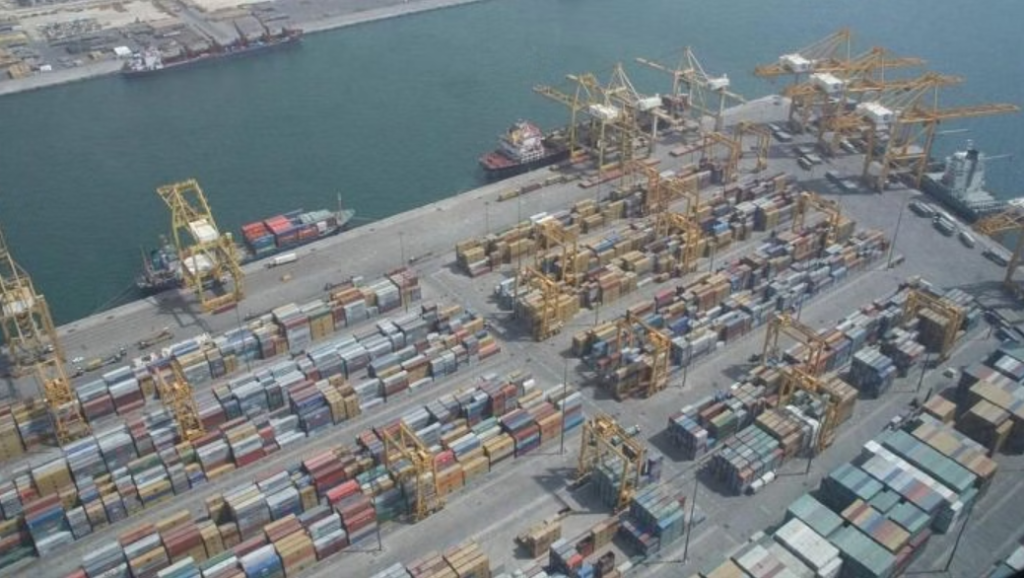
Efforts have commenced to harmonize procedures related to voyage, vessel, and custom-related clearances between three ports on India’s western coast — Mundra, Kandla, and Nhava Sheva — and two ports in the UAE, Jebel Ali and Fujairah. This initiative aims to streamline and facilitate smoother operations, reducing bureaucratic delays and enhancing efficiency in the shipping process.
India has set a ‘100-day deadline’ to complete this process, indicating a strong commitment to rapidly advancing the project.
“What this means is that once a document is uploaded here at Indian ports, be it Mundra, Kandla, or Nhava Sheva before the vessel sets sail for UAE, vessel authorities won’t have to produce the documents again when they reach Jebel Ali or Fujairah ports. The same document will be accepted by the port authorities there to clear the vessel and cargo,” a senior government official involved in the project explained.
Put simply, the exchange of all documents related to vessel and cargo clearances will be conducted seamlessly through a virtual platform, to which port authorities on both sides will be onboarded. This integrated system will facilitate a kind of free trade zone, ensuring ease of doing business and significantly reducing the time and paperwork required for port clearances.
This initial phase will be followed by a second stage, where custom-related procedures at ports on both sides will be harmonized. “Multiple steps are being planned in phases to align the port-to-port operations between India and UAE,” the official added, highlighting the comprehensive approach being adopted to achieve full operational efficiency.
The official further mentioned that while shipping routes between ports on India’s western coast and the UAE are currently active, they are “not seamless.” At present, all necessary information must be cleared at India’s end and again at the UAE ports, causing duplication and inefficiency.
India, the US, the UAE, Saudi Arabia, Italy, France, Germany, and the European Union (EU) had come together last September in New Delhi during the G-20 Summit to launch the India-Middle East-Europe Economic Corridor. The corridor involves transit by ship between India, the UAE, and Saudi Arabia, followed by a rail link to Jordan from where the shipment will move by sea again to Turkey and further by rail to Europe. This ambitious project aims to enhance connectivity and trade between these regions, offering an alternative to existing routes such as the Suez Canal.
A second government official stated that it has also been proposed that along with work on the first leg of IMEC, RITES (Rail India Technical and Economic Service Limited) — a PSU under the Ministry of Railways — will undertake a study to identify missing rail links in the existing rail infrastructure between Saudi Arabia and Jordan. “They will identify the missing rail links, assess the investment required along with the timelines needed to finish the project,” the official said, emphasizing the critical role of rail connectivity in the overall success of the corridor.
Once the shipments reach Israel’s Haifa port on the Mediterranean coast via the rail link from Saudi Arabia to Jordan, it will then make its way to the port of Piraeus in the southwest of Greece and onwards to other parts of Europe. This multimodal transport route is expected to significantly reduce transit times and costs, enhancing the competitiveness of goods transported along this corridor.
The second official added that operationalizing the rail link between Saudi Arabia and Jordan is one of the most important components of the IMEC. “Once the entire rail infrastructure is in place, the cargo from Indian ships can be transported via rail to Jordan and onwards to Europe. They won’t have to cross the Red Sea to reach Europe through the Suez Canal,” the official elaborated.
Currently, 37 percent of India’s total foreign trade with Europe takes place through the Suez Canal, which has seen a record drop in transits this year due to attacks by Houthis. The IMEC offers a strategic alternative that could mitigate risks associated with the Suez Canal and provide a more stable and secure route for trade.
It has also been learnt that several rounds of meetings have taken place between officials from the ministries of external affairs, shipping, and commerce to deliberate on India’s role in the IMEC. A joint working group comprising stakeholders from ministries of external affairs, commerce, shipping, railways, and departments, including customs, has also been formed to iron out details and ensure smooth implementation of the project.
The two officials, however, clarified that the entire IMEC corridor is not being operationalized just yet. “It’s just the first leg of the corridor that we plan to operationalize in the first 100 days (of the Modi government),” said the second official, indicating that the focus is on achieving initial milestones before expanding to the full scope of the corridor.
Further, according to officials in the Ministry of Ports, Shipping and Waterways, India is already working to augment the capacity of its western ports to support EXIM (export-import) cargo, which will come in handy once IMEC takes off. The Union Cabinet recently cleared a proposal to develop the Rs 76,220 crore deepwater port at Vadhavan in Maharashtra’s Palghar district, which will also be linked to the corridor. Located along the Arabian coast, five km north of Mumbai, once complete, it will be the biggest container port in India — both in terms of capacity and draft (depth in harbour).
Currently, there are three ports on India’s western coast that will be linked to IMEC — Jawaharlal Nehru or Nhava Sheva Port in Maharashtra’s Navi Mumbai, and Kandla or Deendayal and Mundra ports in Gujarat’s Kutch. These ports are being upgraded and their capacities enhanced to handle the increased traffic and trade volumes expected once the IMEC becomes fully operational.
The IMEC represents a significant step forward in regional connectivity, trade facilitation, and economic integration. By addressing the current inefficiencies and streamlining processes, the initiative aims to create a more robust and resilient trade corridor that can drive economic growth and development across the participating regions.