


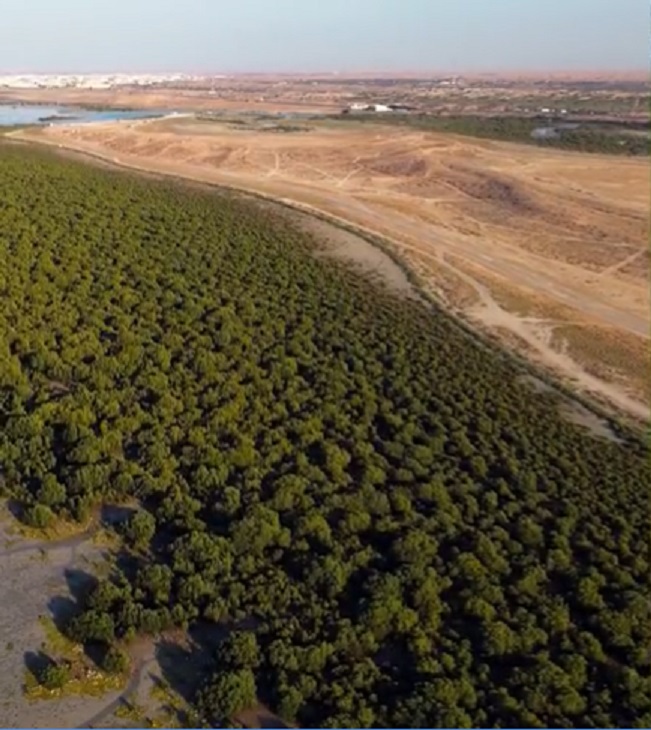
In the United Arab Emirates, a remarkable transformation is underway, spurred by the fact that about 80% of the country’s land comprises desert terrain. To combat desertification and rejuvenate its arid landscapes, the UAE has implemented proactive measures aimed at turning these barren expanses into lush green areas. This initiative mirrors similar endeavors undertaken by countries like China, reflecting a global awareness of the challenges posed by desertification.
The Middle East region is particularly vulnerable to water scarcity, with 12 out of the 17 most “water-stressed” countries worldwide situated here. The UAE, receiving less than 200 mm of rainfall annually, grapples with the daunting task of managing its limited water resources in the face of growing demand.
A stark comparison underscores the disparity in rainfall patterns between the UAE and other regions globally. For instance, while the United Kingdom absorbed an average of 1,051 mm of rainfall in 2022, Singapore experienced a staggering 3,012 mm during the same period. Such disparities highlight the acute water scarcity challenges confronting the UAE and its neighbors.
Abdulla Al Mandous, the director general at the UAE National Centre of Meteorology, sheds light on the country’s proactive approach to addressing water scarcity. With investments exceeding $20 million in cloud seeding research, the UAE aims to augment rainfall through innovative techniques. Cloud seeding, a process designed to enhance precipitation, holds promise as a potential solution to alleviate water scarcity and mitigate its impact on the region’s ecosystem and economy.