


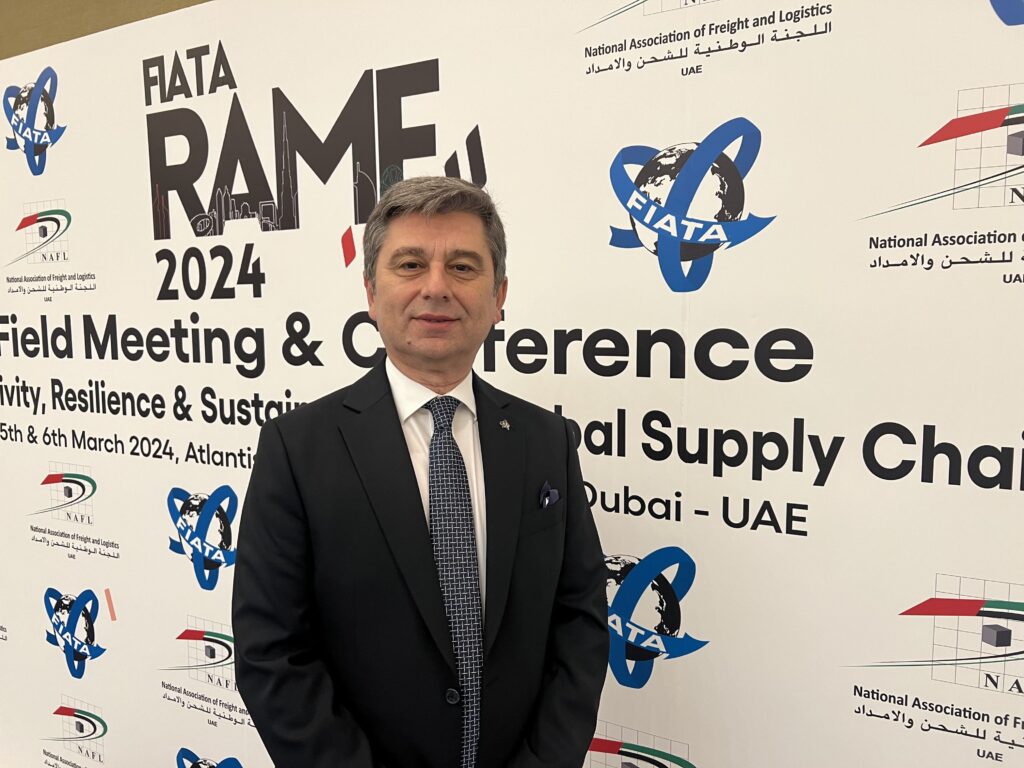
Navigating Global Sea Freight Challenges: Insights from FIATA President
Abu Dhabi, 5th March, 2024 (WAM) – In a significant development for the global logistics landscape, Turgut Erkeskin, President of the International Federation of Freight Forwarders Associations (FIATA), shared key insights regarding the anticipated stabilization of global sea freight rates. The remarks were made on the sidelines of the FIATA-RAME (Region Africa Middle East) event held in Dubai, shedding light on critical aspects shaping the maritime and air freight sectors.
Erkeskin highlighted the noteworthy challenges faced by maritime shipping, emphasizing their spillover effects on air freight, leading to a surge in prices when compared to pre-COVID levels. The revelation indicates a complex interplay between different modes of freight transportation and the broader economic dynamics at play.
Anticipating a potential stabilization in sea freight rates, Erkeskin pointed towards an expected surge in both capacity and volume. While certain shipping routes remain unaffected, others, particularly those traversing Africa and Europe, have witnessed significant rate hikes. This dynamic suggests a nuanced global scenario with regional variations, underscoring the intricacies of the supply chain landscape.
The FIATA President delved into the broader economic context, noting that the anticipated 2.4 percent increase in global economic growth for 2024 is poised to exert a substantial influence on logistics and freight operations globally. Economic forecasts, therefore, become integral in understanding the trajectory of the freight industry, emphasizing the interconnectedness of economic growth and logistical activities.
Erkeskin also shed light on the shifting patterns of foreign direct investment, pointing towards a notable trend favoring regions such as the Middle East and Africa. This strategic shift in investment has a direct impact on logistics activities, further emphasizing the need for adaptive and resilient supply chain strategies.
The FIATA-RAME conference, where Erkeskin shared these insights, plays a pivotal role in addressing the prevailing challenges in the global supply chain landscape. By bringing together key industry stakeholders, the event aims to foster collaboration and innovation to enhance supply chain efficiency and resilience. Dubai’s role as a major global trade hub adds an additional layer of significance to the conference, positioning it as a platform for crucial discussions and strategic collaborations.
Erkeskin concluded by underlining the imperative of exploring alternative solutions to fortify global supply chain resilience and efficiency. These solutions encompass the creation of new trade routes, identification of alternative transit corridors, and harnessing the power of digital transformation to optimize the effectiveness of transportation and logistics processes. In doing so, the freight industry can proactively navigate challenges and contribute to the evolution of a more robust and adaptive global supply chain ecosystem.