


Eid Al Adha 2024 in UAE: A Spiritual and Festive Celebration
Eid Al Adha holds a special place in the hearts of Muslims worldwide, including those in the United Arab Emirates (UAE). Beyond its significance as a religious observance, Eid Al Adha is a time for families and communities to come together in unity and celebration.
Spiritual Significance and Timing
Observed on the 10th day of Dhul Hijjah, the last month of the Islamic lunar calendar, Eid Al Adha follows the Day of Arafah, which is considered the holiest day in Islam. Falling on Sunday, June 16, in 2024, this day marks the culmination of the annual Hajj pilgrimage and commemorates the willingness of Prophet Ibrahim (Abraham) to sacrifice his son as an act of obedience to God’s command.
Paid Holidays and Community Gatherings
Recognizing the importance of this occasion, both the private and public sectors in the UAE grant four paid holidays to employees, spanning from Saturday, June 15, to Tuesday, June 18. This extended break allows individuals to fully immerse themselves in the spiritual and festive aspects of Eid Al Adha.
Eid Prayer Rituals
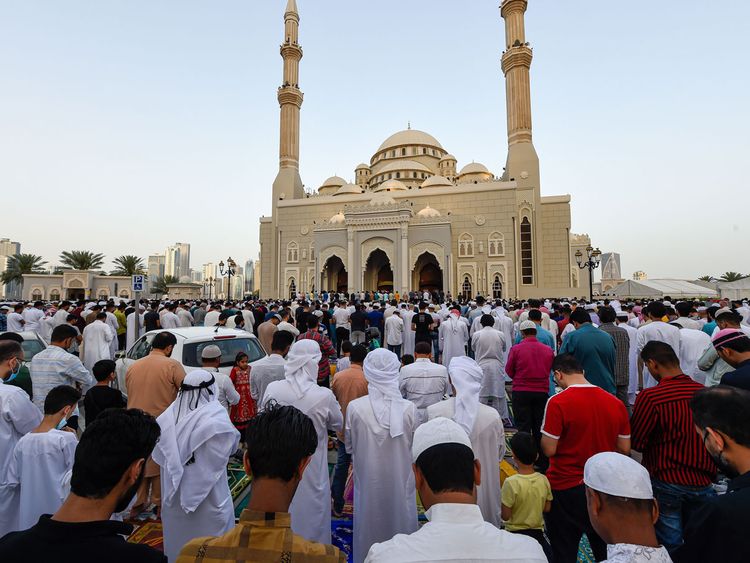
On the morning of Eid Al Adha, Muslims across Abu Dhabi, Dubai, Sharjah, and other emirates gather at mosques and designated prayer grounds, known as musallahs. The congregational Eid prayer consists of two units (raka’ah), led by an imam. Before the prayer begins, worshippers engage in multiple takbirs (recitations of “Allahu Akbar” or “God is Great”) as a symbol of glorification and gratitude towards Allah.
Prayer Timings Across Emirates
The prayer timings for Eid Al Adha in major Emirates are as follows:
- Abu Dhabi
- Abu Dhabi City: 5:50 AM
- Al Ain: 5:44 AM (According to the interactive e-calendar published by the Sheikh Zayed Grand Mosque Centre)
- Dubai
- Dubai: 5:45 AM (According to the Hijri calendar published by the Islamic Affairs and Charitable Activities Department in Dubai)
- Sharjah
- Sharjah: 5:44 AM (According to the Hijri calendar published by the Sharjah Islamic Affairs Department)
These timings are based on lunar calculations and may vary slightly. The exact prayer times will be confirmed closer to the date through official announcements.
- Other Emirates
- Ajman: 5:44 AM
- Umm Al Quwain: 5:43 AM
- Ras Al Khaimah: 5:41 AM
- Fujairah: 5:41 AM
Eid Prayer Rituals
During the Eid prayer, the imam leads the congregation through a sequence of recitations and supplications. In the first raka’ah, after the opening takbir, the imam recites Surah Al-Fatiha followed by another chapter from the Quran. This is followed by additional takbirs. The second raka’ah follows a similar pattern, concluding with the imam delivering a two-part sermon (khutbah), which includes reflections on the significance of Eid Al Adha and guidance for the community.
Celebrations and Traditions
After the prayer and sermon, Muslims exchange warm embraces and greetings of “Eid Mubarak” with family, friends, and neighbors. The day continues with festive meals, where traditional dishes are shared among loved ones. It is also customary to give gifts, especially to children, and to engage in acts of charity and goodwill towards others in the community.
Cultural Significance and Unity
Eid Al Adha serves not only as a religious observance but also as a time to strengthen familial bonds, promote unity among Muslims, and reflect on the values of sacrifice, generosity, and compassion. The festivities highlight the cultural richness of the UAE, where people from diverse backgrounds come together to celebrate their shared faith and heritage.
Eid Al Adha in the UAE is a blend of spiritual reverence and joyous celebration, marked by communal prayers, festive gatherings, and acts of kindness. It is a time when Muslims reaffirm their faith, express gratitude for blessings, and extend goodwill to others. The observance of Eid Al Adha underscores the UAE’s commitment to religious tolerance, cultural diversity, and harmony among its people.